


What's Happening?
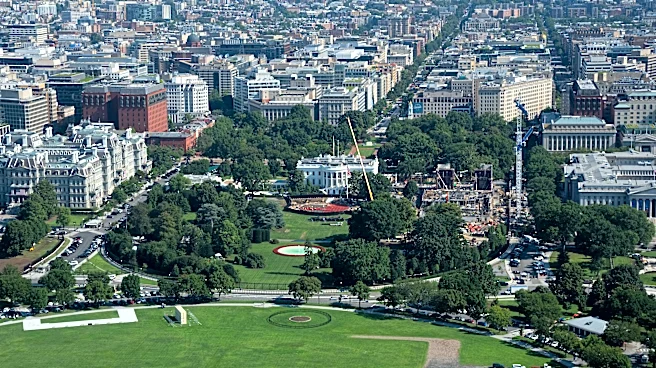
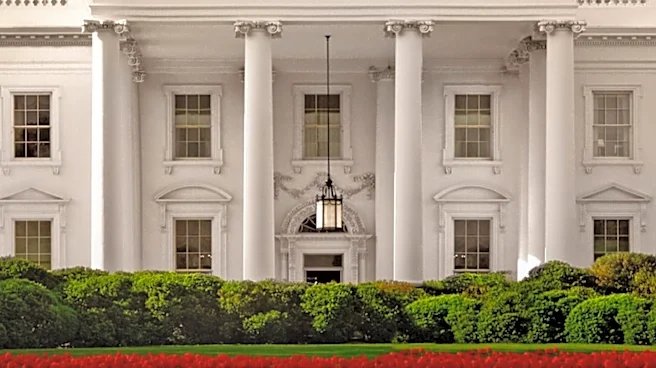
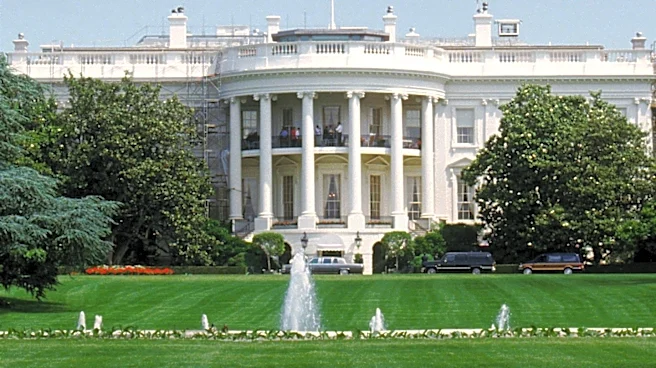
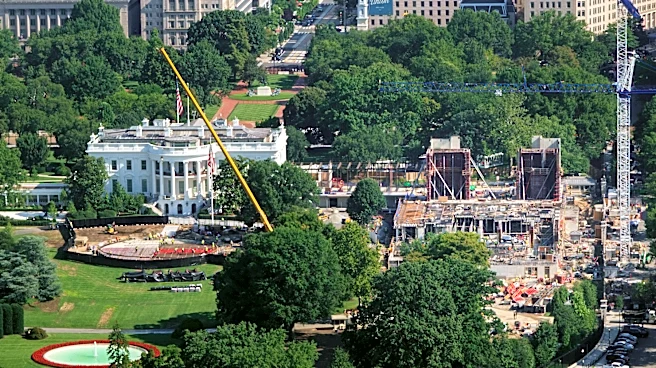
President Trump has filed an emergency request with the Supreme Court, seeking permission to proceed with the construction of a $400 million ballroom at the White House. This appeal follows repeated rulings by lower courts that have blocked the project,
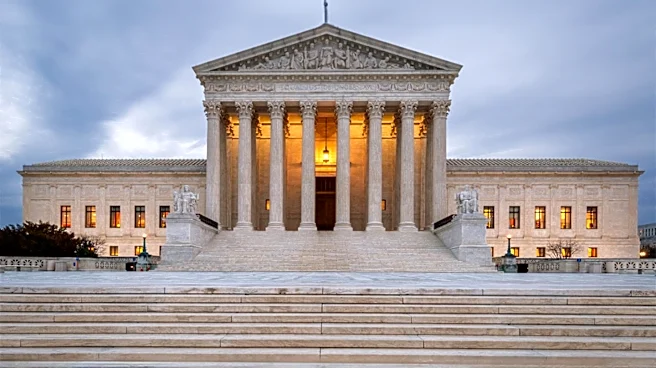
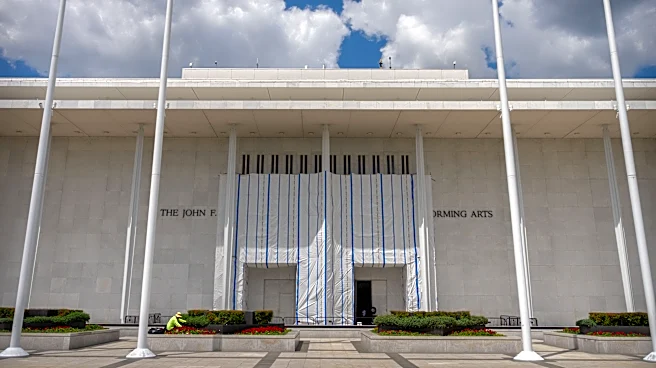
asserting that Congressional approval is required before construction can continue. The DC Circuit Court of Appeals, in its August 7 ruling, agreed with a federal judge's decision to halt work on the above-ground portions of the ballroom, though it permitted the construction of a sophisticated bunker beneath it to proceed. President Trump's administration argues that the project is "absolutely required" for the President's safety, citing past assassination attempts, and emphasizes the architectural values and design inspired by the Supreme Court's Corinthian columns. The filing includes new renderings showing stylistic changes, such as large presidential seals in gold on the building's exterior.
Why It's Important?
This case highlights a significant constitutional and political struggle over executive power and congressional oversight regarding the White House, often referred to as "the People's House." The lower courts' insistence on Congressional approval underscores the principle of checks and balances, suggesting that major alterations to national landmarks require legislative consent, not just executive discretion. President Trump's argument, framing the project as a national security necessity and an exercise of presidential authority to "renovate, secure, and protect the White House," challenges this interpretation. The National Trust for Historic Preservation, which brought the case, argues against "unfettered authority" for the Executive Branch to redesign the White House. The Supreme Court's decision will set a precedent for future presidential projects and could redefine the scope of executive power concerning federal property and historical preservation.
What's Next?
The National Trust for Historic Preservation has until Tuesday noon to respond to President Trump's petition at the Supreme Court. Following this, the Supreme Court will decide whether to hear the emergency request and potentially issue a ruling on the matter. If the Supreme Court sides with President Trump, construction on the above-ground ballroom could resume, potentially allowing the project to be completed by the summer of 2028, as per the expedited timeline. Conversely, if the Supreme Court upholds the lower court rulings, President Trump would need to secure Congressional approval to continue the project, which could face significant political hurdles and delays. The outcome will not only impact the physical landscape of the White House but also influence the balance of power between the executive and legislative branches regarding federal property development.
Beyond the Headlines
Beyond the immediate legal and political implications, this case touches upon deeper themes of presidential legacy, historical preservation, and the symbolic representation of power. President Trump's personal involvement in the design, from floor plans to marble selection, and the proposed opulent features like "magnificent Corinthian columns" and gold presidential seals, reflect a desire to leave a distinct architectural mark on the White House. This contrasts with the "restrained aesthetic of republican simplicity" traditionally associated with the building, as noted by sources familiar with historical building approvals. The debate over the ballroom's design and the process of its approval raises questions about who ultimately dictates the aesthetic and functional evolution of national symbols, and whether a president's personal vision should supersede established oversight mechanisms and historical precedents.