
What's Happening?
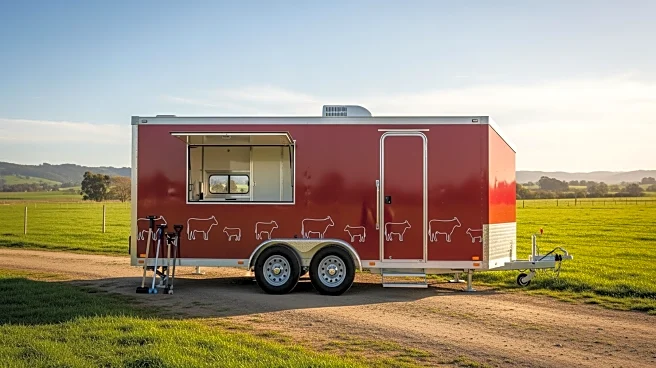
Red Meat Industry Services (RMIS) in South Africa has initiated a mobile trailer program aimed at enhancing livestock health and increasing small-scale farmers' participation in the formal value chain.
Khomotso Mashiloane, a Livestock Technical Adviser for Ruminants at RMIS, is spearheading the initiative, which focuses on providing essential services such as vaccinations, health assessments, and training sessions to farming communities lacking adequate animal handling facilities. The program is part of RMIS's Red Meat Strategy 2030, targeting the inclusion of 250,000 weaners from small-scale farmers by 2030. The initiative also addresses challenges such as disease management, cultural practices, and record-keeping, aiming to improve biosecurity and traceability within the red meat industry.
Why It's Important?
The mobile trailer program by RMIS is crucial for the red meat industry as it seeks to bridge the gap between small-scale farmers and the formal market. By improving livestock health and productivity, the initiative can significantly enhance the economic prospects of small-scale farmers, allowing them to participate more effectively in the value chain. This program also aims to address critical issues such as disease management and traceability, which are vital for maintaining biosecurity and expanding market access, particularly for exports. The initiative supports inclusive growth by ensuring that the benefits of economic development are shared among all stakeholders, including farmers, workers, and consumers.
What's Next?
RMIS plans to continue developing partnerships with local agricultural organizations, veterinary services, and community leaders to support the implementation of the mobile trailer program. The organization is also prioritizing the establishment of a comprehensive traceability system for the South African red meat sector, which will monitor livestock and meat products throughout the value chain. This system aims to improve disease management, combat stock theft, and enhance trade opportunities. RMIS is focused on integrating various record-keeping systems and ensuring compliance with international standards for traceability and transparency.
Beyond the Headlines
The mobile trailer program not only addresses immediate challenges in livestock health and farmer participation but also has broader implications for sustainable agricultural practices. By respecting cultural and traditional practices while introducing modern techniques, RMIS is fostering a more inclusive and resilient agricultural sector. The initiative's focus on traceability and biosecurity is particularly relevant in the context of recent foot-and-mouth disease outbreaks, highlighting the need for robust systems to prevent and manage such crises. The program's success could serve as a model for similar initiatives in other regions, promoting sustainable and inclusive growth in agriculture.