






What's Happening?
North Carolina Governor Josh Stein has vetoed House Bill 958, a comprehensive election bill passed by the Republican-controlled General Assembly. The legislation proposed several changes to election laws, including shortening the early voting period in primaries
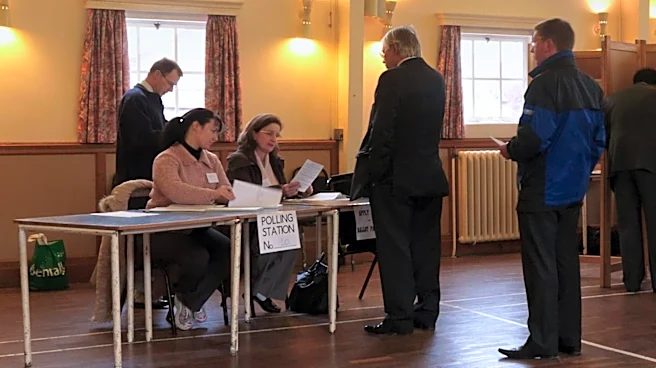
and special elections from 17 days to 10 days. It also sought to task the state auditor with auditing election administration in each of the state's 100 counties every six years and allow challenges to early ballots until the third day after the election, and absentee or military ballots until the fifth business day after the election. Governor Stein, flanked by Democratic lawmakers and voting rights advocates, stated that the bill is part of a "yearslong effort by Republicans in the General Assembly of partisan attacks on our elections and on your vote." He highlighted previous Republican actions such as voter ID requirements in 2023, changes to elections oversight in 2024, and congressional map gerrymandering in 2025. Republicans, however, argue that the bill introduces "practical election reforms" aimed at boosting voter confidence.
Why It's Important?
Governor Stein's veto of House Bill 958 underscores the ongoing partisan battle over election integrity and voting access in North Carolina, a key swing state. The proposed changes, particularly the reduction in early voting days and the expanded ability to challenge ballots, could significantly impact voter participation and the electoral process. Democrats and voting rights advocates argue these measures disproportionately affect certain demographics and make it harder for citizens to vote, potentially leading to voter suppression. Conversely, Republicans maintain that such reforms are necessary to ensure the security and fairness of elections, aiming to prevent fraud and increase public trust. The dispute reflects a national trend where states are enacting diverse election laws, often along partisan lines, leading to increased litigation and public debate over the balance between access and security in voting. The outcome of this legislative standoff could influence future election dynamics and voter engagement in North Carolina.
What's Next?
Following Governor Stein's veto, House Republicans have vowed to override it. Republicans hold a supermajority in the Senate and are one vote shy of a supermajority in the House. Historically, they have often found a Democrat or Unaffiliated member willing to support their override efforts. However, any potential override votes are not expected to occur for several months, as the legislature adjourned in early August and does not plan to return for substantive business until after November's elections. In the interim, the debate over election reforms is likely to continue, with both sides mobilizing support for their respective positions. The state auditor, Dave Boliek, a Republican, has expressed support for post-election audits as a way to boost public confidence, indicating a continued push for accountability measures. The legislative battle highlights the deep divisions within North Carolina's political landscape regarding election administration.
Beyond the Headlines
The ongoing legislative struggle over election laws in North Carolina, exemplified by Governor Stein's veto, reflects a broader national tension concerning the future of democratic processes. Beyond the immediate policy changes, this conflict touches upon fundamental questions of civic participation, trust in institutions, and the balance of power between legislative and executive branches. The rhetoric surrounding 'partisan attacks' versus 'election integrity' reveals a deep ideological chasm that could further polarize the electorate. The ability of individuals to challenge ballots, as proposed in the bill, could lead to increased scrutiny and potential delays in election certification, fostering an environment of distrust. This situation also highlights the critical role of state-level legislation in shaping national electoral outcomes, as changes in voting access in a state like North Carolina can have ripple effects on federal elections and the overall perception of democratic fairness in the U.S.