







What's Happening?
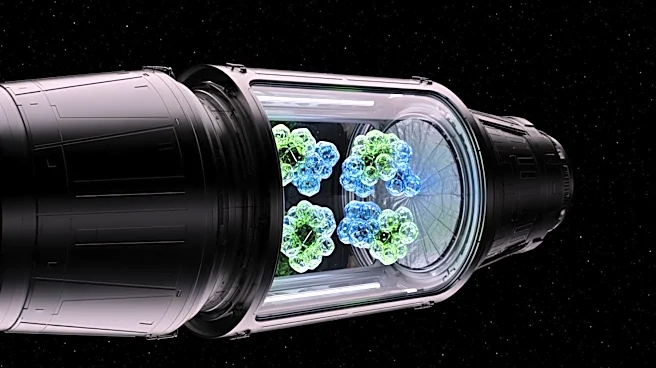
Aspera Biomedicines has successfully launched its second ADAR1p150 protein crystallization experiment to the International Space Station (ISS) aboard SpaceX CRS-34. This mission aims to advance the development of an oral formulation of Rebecsinib, a therapeutic
targeting cancer stem cells. The experiment utilizes Redwire Corporation's Pharmaceutical In-space Laboratory (PIL-BOX) technology to crystallize proteins in microgravity, providing structural insights that are unattainable on Earth. These insights are crucial for improving drug formulations and broadening patient access. The mission builds on Aspera's previous experiment and is funded by NASA's In Space Production Applications (InSPA) Phase 2 award.
Why It's Important?
The successful launch of Aspera's experiment represents a significant step forward in cancer research and drug development. By leveraging the unique environment of space, Aspera aims to gain detailed structural insights into drug-target interactions, potentially leading to more effective cancer treatments. This approach could accelerate the development of therapies for over 20 types of cancer, offering hope for improved patient outcomes. The collaboration with NASA and the use of space-based research platforms highlight the innovative strategies being employed to tackle complex healthcare challenges. The mission underscores the potential of space research to drive advancements in biotechnology and pharmaceuticals.