






What's Happening?
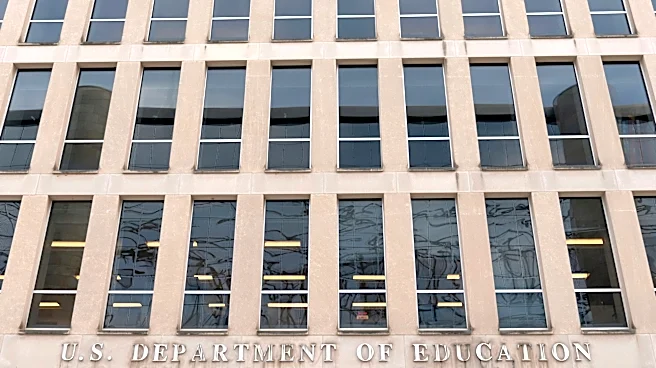
The U.S. Department of Education, under the Trump administration, has expanded its list of graduate degrees considered 'professional' for federal student-loan purposes. This expansion, prompted by a court order, increases the number of degrees from 11
to 29. However, the list still excludes graduate-level teaching and education leadership degrees, which means students pursuing these fields will continue to face lower borrowing caps. The updated list is part of the administration's implementation of borrowing caps introduced in the One Big Beautiful Bill Act, signed into law by President Trump. These caps allow higher borrowing limits for 'professional' degrees compared to other graduate degrees. The exclusion of education-related degrees has sparked criticism from education advocates who argue that these fields should also be recognized as professional due to their importance in preparing individuals for roles that require advanced education.
Why It's Important?
The decision to exclude most K-12 education fields from the expanded list of 'professional' degrees has significant implications for students and the education sector. By maintaining lower borrowing caps for these degrees, the policy could limit access to advanced education for aspiring educators and administrators, potentially affecting the quality of education leadership. This move may also influence the financial burden on students pursuing these degrees, as they may need to seek alternative funding sources. The broader impact on the education sector could include challenges in attracting and retaining qualified professionals in leadership roles, which are crucial for driving educational improvements and reforms.
What's Next?
The Education Department's list may continue to evolve as legal challenges proceed. Organizations representing educators and other professional groups have already contested the narrow definition of 'professional' degrees, and further legal actions could prompt additional changes. Meanwhile, stakeholders in the education sector may advocate for legislative intervention to establish a clearer and more inclusive definition of 'professional' degrees. As the situation develops, students and educational institutions will need to navigate the implications of these borrowing caps and adjust their financial planning accordingly.