



What's Happening?
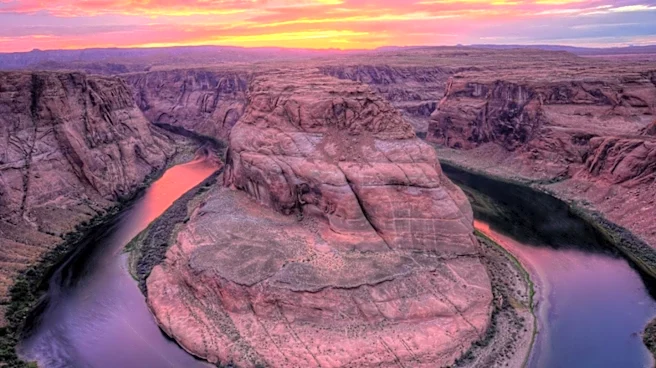
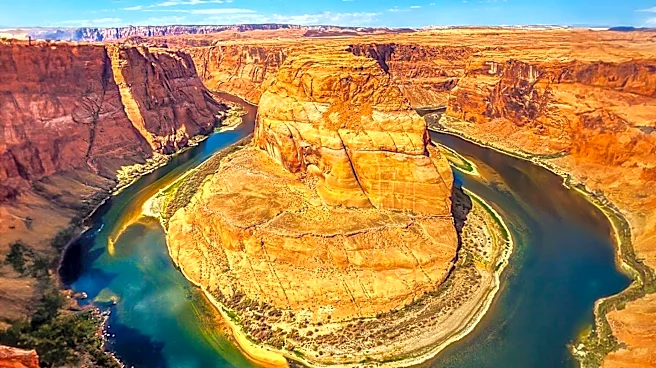
The federal government has introduced a new framework to manage the dwindling resources of the Colorado River, following the inability of seven states to reach a consensus on water cuts. This plan, which will be revisited every two years, aims to address
the severe water shortages affecting Arizona, California, and Nevada. Arizona is expected to face the most significant reductions, while conservation efforts in the Upper Basin states remain voluntary. The framework is designed to adapt to worsening climate conditions, allowing for potential deeper cuts if necessary. The Colorado River is crucial, supplying water to one in ten Americans and supporting agriculture that produces 15% of the nation's food.
Why It's Important?
The new framework is critical as it addresses the allocation of a vital resource amidst ongoing climate challenges. The Colorado River's water is essential for millions of Americans and the agricultural sector, which could see increased food prices due to water shortages. The plan's flexibility allows for adjustments based on climate conditions, but it also introduces uncertainty for water users, impacting investment and planning. The potential for legal disputes over water rights and allocations could further complicate the situation, highlighting the need for a sustainable and equitable solution.
What's Next?
The states involved will need to negotiate the specifics of the water cuts, with Arizona, California, and Nevada likely to face significant reductions. The federal government will reassess the situation every two years, potentially leading to further cuts if climate conditions worsen. Stakeholders, including state governments and agricultural producers, will need to adapt to these changes, possibly leading to legal challenges over water rights. The ongoing negotiations and potential court battles could shape the future of water management in the region.