
What's Happening?
A recent study conducted by researchers at the Hebrew University of Jerusalem has uncovered a potential vulnerability in cancer cells that could be exploited for future treatments. The study, published
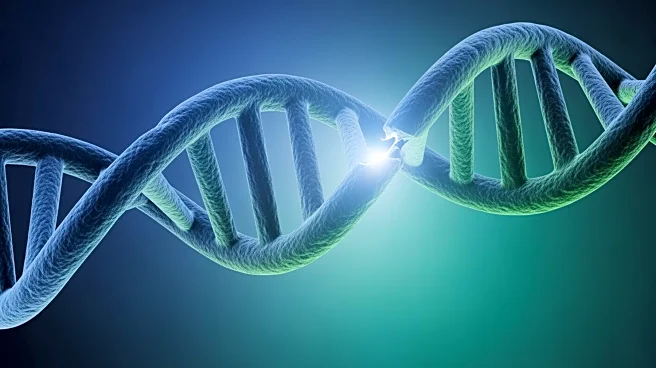
in Science Advances, reveals that the genetic machinery responsible for the rapid growth of tumors also causes significant DNA damage. This damage occurs in regions controlled by super enhancers, which are genetic control areas that force certain genes to operate at high levels. While this activity promotes tumor growth, it also strains the DNA, leading to double-strand breaks, a severe form of genetic damage. The research suggests that by targeting these super enhancers, it may be possible to induce more DNA breaks and delay repair, potentially causing cancer cells to self-destruct.
Why It's Important?
The findings from this study are significant as they provide a new perspective on cancer treatment strategies. By understanding the dual role of super enhancers in both promoting tumor growth and causing DNA damage, researchers can develop targeted therapies that exploit this weakness. Such treatments could specifically weaken cancer cells without harming normal cells, as healthy cells do not rely on these extreme genetic processes. Additionally, by interfering with the DNA stress-repair cycle, these therapies could slow down the development of resistance, making long-term cancer control more achievable. This approach could revolutionize cancer treatment by turning the cancer cell's growth mechanism against itself.
What's Next?
Future research will likely focus on developing drugs that can disrupt super-enhancer activity or increase DNA breaks in cancer cells. These drugs would aim to push cancer cells beyond their repair capacity, leading to cell death. Clinical trials may be necessary to test the efficacy and safety of such treatments. Additionally, researchers will continue to explore the genetic mechanisms underlying cancer cell growth and DNA repair to identify other potential targets for therapy. Collaboration between geneticists, oncologists, and pharmaceutical companies will be crucial in advancing these findings from the laboratory to clinical applications.
Beyond the Headlines
The study highlights the complex nature of cancer biology and the potential for innovative treatment strategies that leverage the inherent weaknesses of cancer cells. It also underscores the importance of genetic research in understanding and combating cancer. The ethical implications of manipulating genetic processes in cancer cells will need to be considered, particularly in terms of ensuring that treatments are safe and do not inadvertently harm healthy cells. As research progresses, it will be important to balance the potential benefits of new therapies with the risks and ethical considerations involved.