

What's Happening?
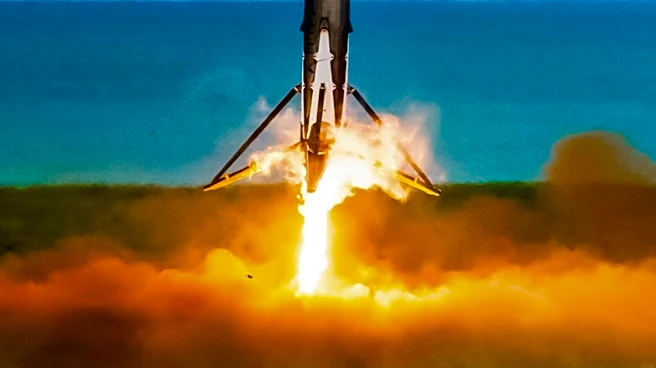
A SpaceX Falcon 9 rocket stage unintentionally crashed into the Moon on August 5, 2026, after being adrift in space since its launch in January 2025. The collision occurred at a speed of 5,400 miles per hour, creating a significant crater on the lunar
surface. The rocket stage was part of a mission that delivered two lunar landers to the Moon. The crash was predicted by scientists, who had been tracking its trajectory. The event highlights the challenges of managing space debris.
Why It's Important?
The incident underscores the growing concern over space debris and its management. As space exploration and commercial activities increase, the risk of unintended collisions with celestial bodies also rises. This event raises questions about the disposal of space hardware and the potential hazards it poses. The scientific community is interested in studying the impact to gain insights into the physics of material ejection in low gravity environments, which could inform future space missions and debris management strategies.
What's Next?
NASA's Lunar Reconnaissance Orbiter and other satellites are expected to capture images of the impact site to confirm the details of the crash. These observations will help scientists analyze the effects of the collision and refine models for tracking space debris. The incident may prompt discussions among space agencies and companies about improving protocols for the disposal of space hardware to prevent similar occurrences in the future.