

What's Happening?
Surya Agrotech, a company based in Thailand, is advancing agricultural practices in Southeast Asia by implementing integrated agrotechnology solutions for greenhouse and open-field production. Led by Ganesh Gowda, the company focuses on providing turnkey
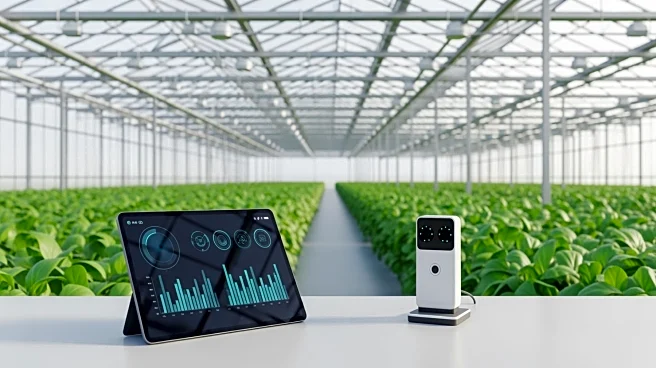
projects that incorporate irrigation, climate control, and energy management. A notable project involves a 5-hectare solar-powered drip irrigation system that combines renewable energy with AI-based wireless automation. This system aims to enhance water efficiency, energy savings, and crop performance. Surya Agrotech's approach includes naturally ventilated polyhouses designed for humid climates, which utilize passive air movement to maintain temperature and humidity. The company also emphasizes sustainability by promoting solar-powered irrigation systems and precision drip irrigation, aiming to reduce operational costs and conserve resources.
Why It's Important?
The initiatives by Surya Agrotech are significant as they address the growing need for sustainable agricultural practices in Southeast Asia, a region where agriculture is a key economic sector. By integrating renewable energy and AI-driven automation, the company is helping farmers reduce dependency on grid electricity and improve resource efficiency. This approach not only lowers operational costs but also supports environmental conservation efforts. The focus on chemical-free cultivation and the use of microbe-based fertilizers further highlights a shift towards more sustainable and eco-friendly farming practices. These advancements could lead to increased agricultural productivity and resilience, benefiting local economies and food security in the region.
What's Next?
As Surya Agrotech continues to implement its projects, the company plans to expand its reach and influence in Southeast Asia. The ongoing adoption of AI-based wireless irrigation systems is expected to grow as more farmers become aware of the benefits. The company aims to support farming communities by providing tailored solutions that meet specific needs, potentially leading to broader acceptance of high-tech agriculture. Additionally, the focus on chemical-free cultivation may encourage more farmers to transition to sustainable practices, further enhancing the region's agricultural landscape.
Beyond the Headlines
The integration of AI and renewable energy in agriculture represents a broader trend towards digital transformation in the sector. This shift could lead to long-term changes in how farming is conducted, with increased reliance on data-driven decision-making. The emphasis on sustainability and resource conservation aligns with global efforts to combat climate change and reduce environmental impact. As these technologies become more accessible, they may also influence policy decisions and investment strategies in the agricultural sector.