



What's Happening?
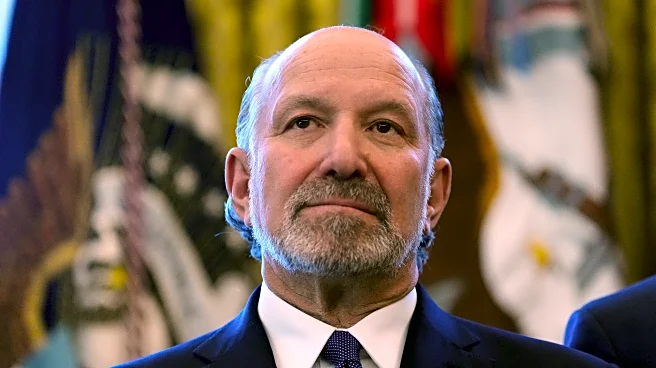
Ro Khanna, a Democratic representative from California, has publicly disclosed the names of six individuals whose identities were previously redacted in the Jeffrey Epstein files. This revelation occurred during a floor speech following Khanna's visit
to the Department of Justice, where he, along with Republican Congressman Thomas Massie, reviewed unredacted documents for two hours. The six individuals named include Leslie Wexner, a billionaire retail magnate and founder of Victoria's Secret, and Sultan Ahmed bin Sulayem, CEO of DP World and an Emirati billionaire businessman. The other four individuals are Nicola Caputo, Salvatore Nuara, Zurab Mikeladze, and Leonic Leonov. Khanna emphasized that being named in the files does not imply guilt, as individuals may appear due to email correspondence or other documentation related to Epstein. The majority of the files remain redacted, and Khanna noted that the Justice Department officials acknowledged their mistake in redacting these names.
Why It's Important?
The disclosure of these names from the Epstein files is significant as it raises questions about transparency and accountability within the Justice Department. The revelation could potentially lead to further scrutiny of the individuals named and their connections to Epstein. This development also highlights ongoing concerns about the extent of Epstein's network and the possible involvement of high-profile figures. The public disclosure by Khanna may pressure the Justice Department to review and possibly release more information from the files, which could have implications for ongoing investigations and public trust in the justice system. Additionally, the involvement of bipartisan members of Congress in this disclosure underscores the political and social importance of the Epstein case.
What's Next?
Following the disclosure, there may be increased calls for the Justice Department to release more unredacted files to the public. This could lead to further investigations into the individuals named and their potential connections to Epstein. Political leaders and advocacy groups may push for greater transparency and accountability in handling the Epstein files. The Justice Department may face pressure to explain the criteria used for redacting names and to ensure that similar mistakes do not occur in the future. The ongoing public interest in the Epstein case suggests that further developments and revelations could emerge as more information becomes available.