







What's Happening?
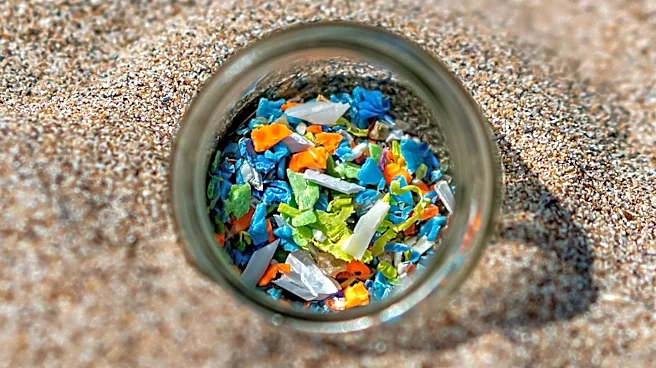
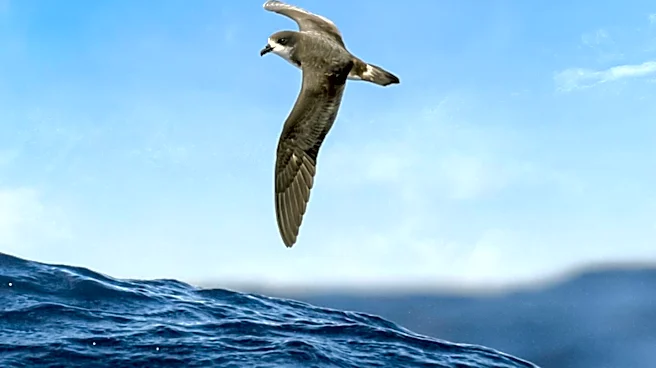
Scientists at Adrift Lab have revealed a troubling increase in plastic ingestion by flesh-footed shearwaters on Lord Howe Island, a remote Australian paradise. After 16 years of research, a recent study documented one young shearwater with 894 pieces
of plastic in its stomach, weighing 64.2 grams, which is over 15% of its average body weight. This record-setting incident follows a trend of increasing plastic accumulation in these birds, with previous findings in 2011 of 276 pieces in a chick and 400 pieces in a young shearwater in 2023. Alex Bond, Principal Curator of Birds at the Natural History Museum in the UK, noted that the plastic crisis is worsening, and current actions are insufficient to address it. Experts warn that even with an ambitious global plastics treaty, ocean waste volume is projected to grow until 2050.
Why It's Important?
This escalating plastic pollution on Lord Howe Island serves as a critical indicator of a global environmental crisis with significant implications for the U.S. and worldwide. The ingestion of plastic by seabirds highlights the pervasive nature of microplastic pollution, which affects even remote ecosystems. This phenomenon impacts marine biodiversity, potentially leading to population declines in affected species, which can disrupt oceanic food webs and ecosystem stability. For the U.S., this issue underscores the need for more effective waste management, recycling initiatives, and reduced plastic consumption to mitigate its contribution to global plastic waste. The economic impact could be substantial, affecting fisheries through contaminated seafood and tourism in coastal areas due to polluted beaches. The long-term monitoring data from Lord Howe Island provides compelling evidence that current efforts are not enough, urging a more robust and immediate response from policymakers and industries.
What's Next?
The continued increase in plastic ingestion by seabirds, despite ongoing global plastics treaty negotiations, suggests that more immediate and comprehensive actions are needed. The upcoming crucial talks in November for a global plastics treaty will be vital in establishing binding agreements to curb plastic production and improve waste management. Scientists, like those from the Scientists' Coalition for an Effective Plastics Treaty, will continue to advocate for evidence-based policies. On a local level, efforts to protect vulnerable species like the flesh-footed shearwaters may involve enhanced monitoring, clean-up operations, and public awareness campaigns. Globally, there will likely be increased pressure on governments and corporations to invest in sustainable alternatives to plastic, develop advanced recycling technologies, and implement stricter regulations on plastic use and disposal. The scientific community will continue to track these trends to provide data for policy adjustments.
Beyond the Headlines
The plight of the flesh-footed shearwaters on Lord Howe Island reveals a profound ethical dilemma concerning humanity's impact on the natural world. The island, often described as a 'paradise,' now symbolizes the global reach of human-generated pollution, challenging the notion of untouched wilderness. This situation highlights the concept of 'ecological grief,' as scientists and conservationists witness the slow destruction of ecosystems and species due to human activities. The long-term monitoring of these birds provides invaluable data, demonstrating the critical importance of sustained scientific research in understanding and addressing environmental crises. It also underscores the interconnectedness of global systems, where plastic waste from distant sources can travel across oceans to impact remote wildlife. This issue calls for a fundamental re-evaluation of consumer culture and industrial practices, pushing for a paradigm shift towards a truly circular economy and a deeper respect for ecological boundaries.