



What's Happening?
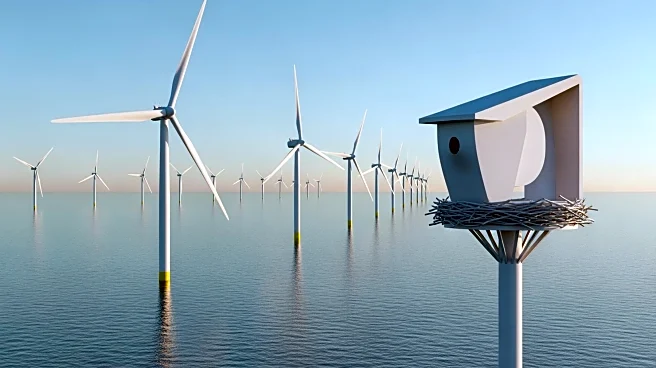
The UK is advancing its offshore wind energy capabilities with the Hornsea 3 project, developed by Ørsted, which aims to balance infrastructure development with biodiversity conservation. The project has introduced the UK's first nearshore artificial
nesting structures to protect the black-legged kittiwake, a seabird species facing population decline due to habitat loss. These structures, capable of hosting up to 500 pairs of birds each, are supported by monopiles installed with precision using advanced technologies from Fugro. The technologies, Starfix® and InclinoCam®, ensure accurate and safe installation, minimizing environmental disruption. This initiative is part of a broader effort to integrate nature-positive solutions into renewable energy projects, demonstrating that energy development can coexist with ecological preservation.
Why It's Important?
This development is significant as it highlights a growing trend in the renewable energy sector to incorporate biodiversity protection into project planning. By safeguarding vulnerable species like the kittiwake, the Hornsea 3 project sets a precedent for future offshore wind developments. This approach not only addresses environmental concerns but also enhances the sustainability and public acceptance of renewable energy projects. The collaboration between Ørsted, Red7Marine, and Fugro exemplifies how technological innovation can facilitate environmentally responsible energy production. As the demand for clean energy grows, such initiatives are crucial in ensuring that the transition to renewable sources does not come at the expense of ecological health.
What's Next?
The success of the Hornsea 3 project could influence future offshore wind developments, encouraging the adoption of similar nature-positive strategies. As the industry expands, there will likely be increased emphasis on integrating conservation measures into energy projects. Stakeholders, including environmental groups and policymakers, may push for regulations that require biodiversity considerations in project approvals. Additionally, the technologies used in this project could become standard practice, improving efficiency and safety in offshore installations. The ongoing monitoring of the nesting structures will provide valuable data on their effectiveness, potentially guiding future conservation efforts in the renewable energy sector.
Beyond the Headlines
The Hornsea 3 project underscores the potential for renewable energy developments to drive positive environmental change. By embedding conservation into the core of engineering processes, the project challenges the notion that industrial progress must be at odds with nature. This approach could lead to a paradigm shift in how energy projects are perceived and implemented, fostering a more harmonious relationship between human activity and the natural world. The project's success may inspire other industries to adopt similar strategies, promoting a broader cultural shift towards sustainability and ecological stewardship.