









What's Happening?
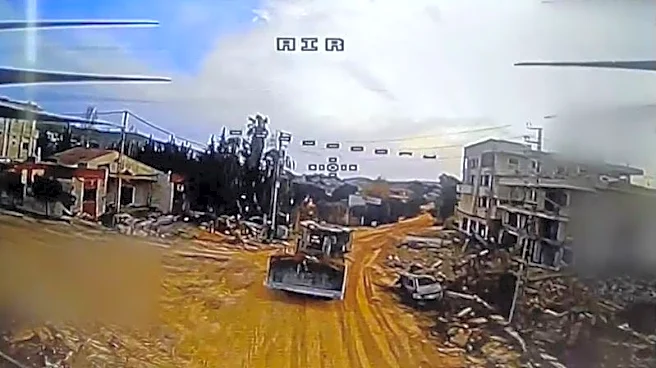
Israel is constructing a new factory to produce first-person view (FPV) drones in response to increasing attacks from Hezbollah's FPV drones in southern Lebanon. The Israeli Defense Forces (IDF) aim to industrialize and expand their arsenal of suicide
drones to enhance battlefield capabilities. This move comes as Hezbollah has been effectively using fiber-optic guided FPV drones, which are resistant to electronic warfare and geographical limitations. The IDF plans to produce 1,000 drones per month initially, with a goal to increase production to tens of thousands. The factory will use indigenous components to address security and supply chain concerns associated with Chinese parts. Israel is also implementing countermeasures, such as netting on vehicles and improving armor defensive systems, to mitigate the threat posed by these drones.
Why It's Important?
The establishment of this factory marks a significant step in Israel's efforts to counter the growing threat of drone warfare, particularly from Hezbollah. The use of FPV drones has become a critical component in modern military strategy, as evidenced by their deployment in conflicts involving Ukraine and Russia. By increasing its production capabilities, Israel aims to maintain a technological edge and ensure the security of its forces. This development also highlights the broader implications of drone warfare, as countries worldwide are compelled to adapt to new military technologies. The U.S. is similarly scaling up its FPV drone production and training, indicating a global shift towards integrating these technologies into defense strategies.
What's Next?
Israel's new factory is expected to begin supplying drones in large quantities by July. The IDF will continue to develop and implement countermeasures to protect its forces from FPV drone attacks. Additionally, the U.S. and other nations are likely to monitor Israel's progress and potentially adopt similar strategies to enhance their own drone capabilities. The ongoing advancements in drone technology and defense systems will likely lead to further innovations and adaptations in military tactics globally.
Beyond the Headlines
The reliance on FPV drones and the subsequent countermeasures raise ethical and legal questions about the nature of modern warfare. The use of drones in conflict zones can lead to increased civilian casualties and collateral damage, prompting discussions on the rules of engagement and the need for international regulations. Furthermore, the integration of advanced technologies in warfare underscores the importance of cybersecurity and the protection of sensitive military data from potential adversaries.