





What's Happening?
The Sterling Heights City Council has voted 4-3 to renew its contract with Flock Safety, ensuring the continued operation of roadside cameras in the city. This decision followed a lengthy public comment period and a plea from Mayor Michael Taylor to discontinue
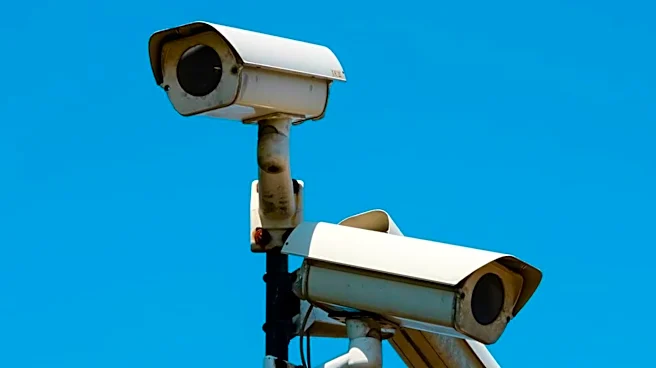
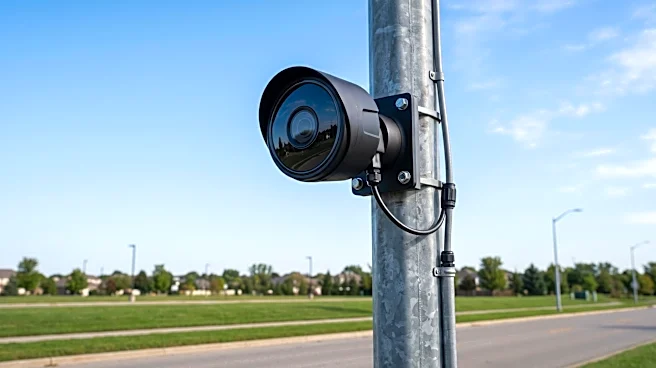
the program, citing concerns over personal privacy and data security. The cameras, known as Automated License Plate Readers (ALPRs), capture exterior details of passing vehicles and are used by police for investigations such as locating stolen vehicles or missing individuals. Police Chief Andrew Satterfield defended the technology, highlighting its effectiveness and the department's efforts to implement safeguards against misuse, including limiting data access to Michigan law enforcement agencies and increasing audits. The annual cost for the Flock system in Sterling Heights is $84,000, funded through state public safety forfeiture funds.
Why It's Important?
This decision highlights the ongoing national debate surrounding privacy versus public safety in the deployment of surveillance technologies. While law enforcement officials argue that ALPRs are crucial tools for crime prevention and investigation, civil liberties advocates and some public officials, like Mayor Taylor, contend that they constitute mass surveillance and infringe upon constitutional freedoms. The renewal in Sterling Heights, despite public opposition and the cancellation of similar contracts in other Michigan communities, underscores a divided approach to balancing these concerns. The city's commitment to a 'reasonable path forward' with increased oversight and transparency measures could serve as a model or a point of contention for other municipalities grappling with similar issues, influencing future policy decisions on surveillance technology across the U.S.
What's Next?
Opponents of the Flock Safety cameras have vowed to continue their pressure against the system, suggesting that the debate in Sterling Heights is far from over. The police department will proceed with its enhanced safeguards, including limiting data sharing to Michigan law enforcement only and increasing audits to prevent misuse. The contract allows for cancellation with 30 days' notice, indicating that future public or political pressure could still lead to a reversal. The ongoing implementation of these cameras and the public's reaction will likely be closely watched by other communities considering or currently using ALPR technology, potentially influencing broader trends in municipal surveillance policies and citizen privacy advocacy.
Beyond the Headlines
The controversy in Sterling Heights reflects a deeper societal tension regarding the role of technology in policing and the erosion of privacy in the digital age. The argument that 'public safety is not the number one goal in this country' but rather 'freedom and liberty' speaks to fundamental American values. The use of ALPRs, while not employing facial recognition or live surveillance, still raises questions about the potential for mission creep and the aggregation of data on innocent citizens. This case also touches upon the legal interpretations of constitutional rights in the context of evolving surveillance capabilities, with police asserting existing case law supports ALPR use, while opponents argue it's unconstitutional. The outcome in Sterling Heights could contribute to the national discourse on how communities balance security needs with the protection of individual liberties.