
What's Happening?
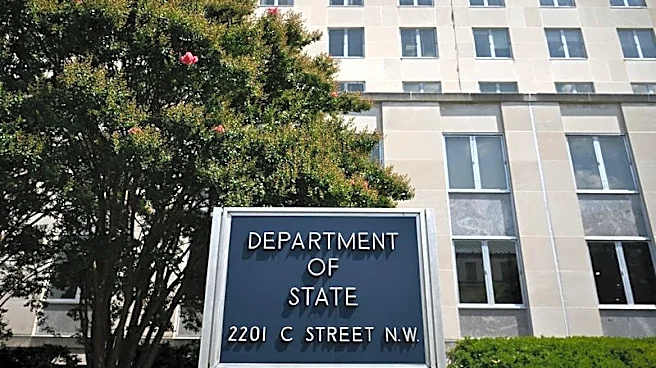
Secretary of State Marco Rubio has announced a new policy aimed at denying visas to individuals linked to 'far-left terrorism,' citing concerns over 'economic sabotage.' This policy, which references Donald
Trump’s National Security Presidential Memorandum-7, has raised significant concerns among legal experts and advocates. Peter Margulies, a law professor at Roger Williams University, expressed worries that the policy could be applied to foreign students and others with legal status in the U.S., potentially infringing on First Amendment rights. The policy's vague language, particularly around 'economic sabotage,' could target individuals involved in movements like the Boycott, Divestment, and Sanctions (BDS) movement or environmental activism. The State Department has not clarified how it will determine affiliations with 'far-left' groups, leading to fears of a broad crackdown on dissent.
Why It's Important?
The policy's implications are significant as it could affect a wide range of individuals, including students and activists, potentially stifling free speech and dissent. The broad and vague criteria for visa denial could lead to legal challenges, especially if it targets individuals within the U.S. The policy may also be part of a broader strategy to emphasize threats from the political left, possibly influencing public perception and policy ahead of upcoming elections. The potential for misuse of this policy raises concerns about government overreach and the protection of civil liberties.
What's Next?
The State Department has yet to announce any specific visa denials under this policy, but legal challenges are anticipated if it is applied broadly. Advocacy groups are likely to monitor the situation closely and may seek injunctions to prevent its implementation. The policy's impact on U.S. foreign relations and domestic civil liberties will be closely scrutinized, with potential implications for future immigration and national security policies.
Beyond the Headlines
The policy highlights ongoing tensions between national security measures and civil liberties, particularly in the context of political dissent. It raises questions about the balance of power within the government and the role of the State Department in shaping immigration policy. The potential targeting of specific activist groups could have long-term effects on political activism and the expression of dissent in the U.S.