


What's Happening?
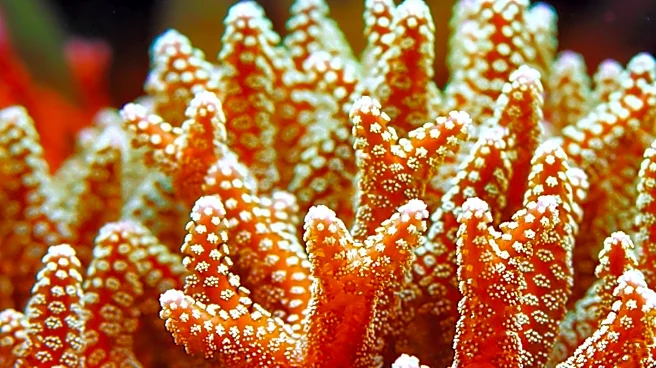
A recent study led by Texas A&M University researchers has uncovered significant genetic adaptation in coral reefs following a mass mortality event caused by a 2019 heat wave in Mo'orea, French Polynesia. The heat wave resulted in severe coral bleaching,
with up to 80% of local coral populations affected. Researchers collected and sequenced genomes from 349 coral colonies before, during, and after the event, revealing that corals with heat-tolerant genetic variants were more likely to survive and reproduce. These findings suggest that the surviving corals passed on advantageous genetic traits to their offspring, providing a genetic blueprint for future resilience against rising ocean temperatures.
Why It's Important?
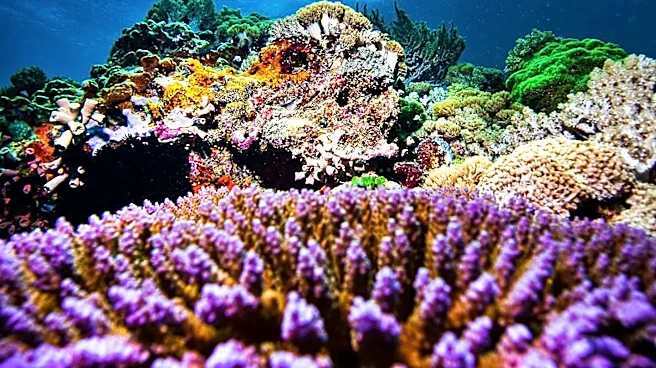
The study highlights the potential for rapid evolution in coral populations, offering hope for their survival amidst increasing marine heat waves. Coral reefs, often referred to as the 'rainforests of the sea,' are crucial for marine biodiversity, supporting over a quarter of all marine life. They also protect coastal communities from strong waves and storm surges. Understanding the genetic factors that contribute to coral resilience can inform conservation strategies and help mitigate the impacts of climate change on these vital ecosystems. However, researchers caution that while evolution may offer a temporary reprieve, it is not a guaranteed solution to the ongoing threat of global warming.
What's Next?
Future research will likely focus on further understanding the genetic mechanisms behind coral resilience and exploring how these findings can be applied to conservation efforts. Scientists may investigate whether similar genetic adaptations are occurring in other coral populations worldwide. Additionally, there may be increased efforts to develop strategies that enhance coral resilience, such as selective breeding programs or genetic interventions. The study underscores the urgency of addressing climate change to ensure the long-term survival of coral reefs and the ecosystems they support.
Beyond the Headlines
The discovery of rapid genetic adaptation in corals challenges traditional views of evolution as a slow process, suggesting that some species may be capable of adapting quickly to environmental changes. This finding could have broader implications for understanding how other marine and terrestrial species might respond to climate change. It also raises ethical considerations regarding human intervention in natural evolutionary processes, as scientists explore ways to assist species in adapting to rapidly changing environments.