





What's Happening?
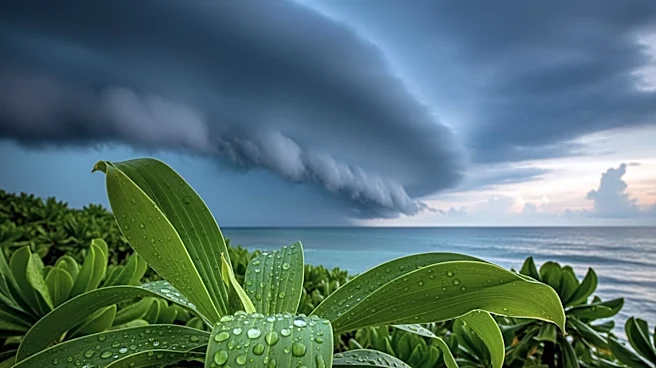
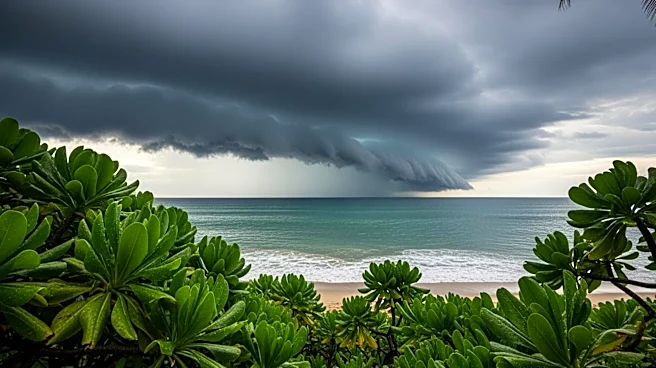
Hawaii is on high alert for potential flash flooding as the state braces for another round of severe weather, just weeks after experiencing record-breaking rainfall. Flood watches have been issued statewide from Wednesday through Friday, with the worst
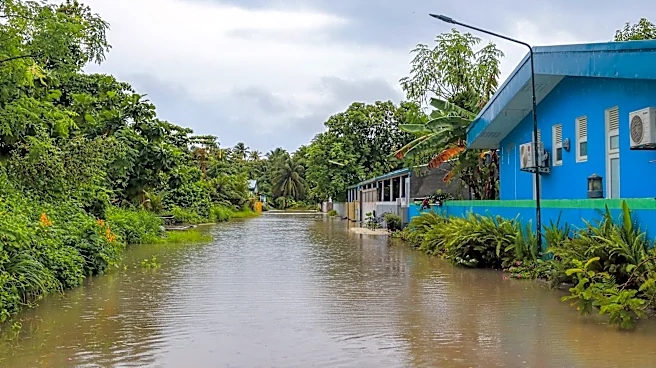
downpours expected on Thursday and Friday. The recent storms have already caused significant damage, estimated to exceed $1 billion, prompting Governor Josh Green to initiate a disaster case management program. The current weather system is linked to a developing triplet cyclone pattern in the West Pacific, contributing to a possible super El Niño. This atmospheric river is expected to bring heavy rain, particularly affecting the Big Island and Maui initially, before moving to Kauai and Oahu. The flood risk is anticipated to peak on Thursday night, with rainfall totals potentially exceeding six inches in some areas.
Why It's Important?
The impending storms pose a significant threat to Hawaii, which is still recovering from the previous deluge. The potential for landslides, road closures, and property damage remains high, exacerbating the challenges faced by communities already impacted by the March storms. The situation underscores the vulnerability of island states to extreme weather events, which are becoming more frequent and intense due to climate change. The economic and social implications are profound, as infrastructure damage and recovery efforts strain local resources. The state's response and preparedness measures will be critical in mitigating the impact of these storms and ensuring the safety and well-being of residents.
What's Next?
As Hawaii braces for the upcoming storms, state and local authorities are likely to focus on emergency response and recovery efforts. The effectiveness of these measures will be crucial in minimizing damage and supporting affected communities. The state may also seek federal assistance to aid in recovery and rebuilding efforts. In the longer term, Hawaii may need to invest in infrastructure improvements and climate adaptation strategies to enhance resilience against future extreme weather events. The situation highlights the importance of proactive planning and investment in climate resilience to protect vulnerable communities and infrastructure.