




What's Happening?
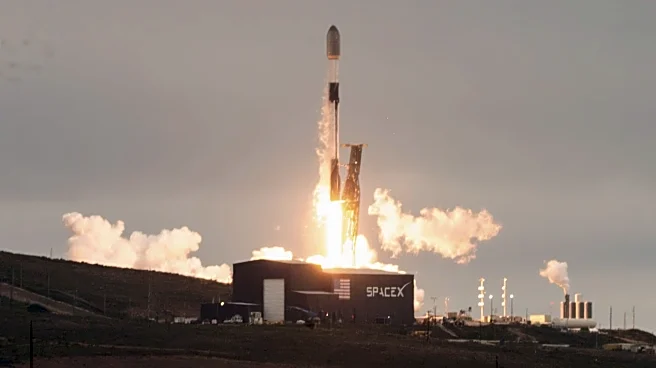
Five news reporters and two military members, who were invited to an event at Vandenberg Space Force Base in California, were briefly detained at gunpoint by security officers. The incident occurred on Monday, prior to an invitation-only groundbreaking
ceremony for a new training facility for missile operators. The group was being escorted onto the base by uniformed public affairs staff in a government minivan when they were ordered out of their vehicles with their hands raised. Officers pointed guns, sirens were activated, and barricades were erected at the gate entrance. The two military members, an enlisted individual and a junior officer, were handcuffed and placed in base vehicles, while the civilians were instructed to sit on a curb. The reporters, representing outlets such as Noozhawk, KEYT, KSBY-TV, and the Santa Maria Times/Lompoc Record, were held for over 30 minutes, causing them to miss the event. All individuals were subsequently released without further incident. A Space Launch Delta 30 public affairs spokesperson attributed the incident to a communication breakdown, stating that the base has experienced an increased number of unauthorized entry attempts and treats every potential unauthorized presence as a legitimate threat.
Why It's Important?
This incident at a U.S. Space Force base raises significant concerns regarding communication protocols, security procedures, and the treatment of invited guests, including members of the press. The detention of both military personnel and journalists at gunpoint, even if due to a 'breakdown in communication,' highlights potential systemic issues in how security threats are assessed and managed at sensitive military installations. For the press, such an event can have a chilling effect on reporting and access to information, potentially hindering transparency and public understanding of military operations. For military personnel, being subjected to such treatment by their own security forces can impact morale and trust within the ranks. The incident also underscores the heightened security environment at U.S. military bases, particularly those involved in critical space operations, and the challenges of balancing security imperatives with the need for public engagement and media access.
What's Next?
Noozhawk's editor-in-chief, Tom Bolton, expressed his intent to engage in discussions with base leadership later this week to review the incident and prevent similar occurrences. This suggests that an internal review or investigation into the communication breakdown and security protocols is likely to take place. The Space Force may need to re-evaluate its procedures for vetting and escorting invited guests, especially media, to ensure that such incidents are not repeated. There could also be a broader discussion within military public affairs about how to better coordinate with security forces to avoid misidentification and unnecessary escalation. The outcome of these discussions and any subsequent changes in policy will be crucial for restoring trust and ensuring smoother operations for future events at Vandenberg Space Force Base and potentially other military installations.
Beyond the Headlines
The incident at Vandenberg Space Force Base touches upon broader themes of civil-military relations and the role of a free press in a democratic society. The use of force, even if perceived as precautionary, against invited journalists and military members can erode public trust in military institutions. It also highlights the inherent tension between national security concerns and the public's right to information. In an era of increasing geopolitical competition and advanced space capabilities, the security of space force bases is paramount. However, the manner in which this security is enforced, particularly when it impacts those with legitimate access, warrants careful scrutiny. The event could prompt a re-examination of training for security personnel regarding threat assessment and de-escalation techniques, especially when dealing with non-hostile individuals. Ultimately, the incident serves as a stark reminder of the complexities involved in managing security at critical national assets while upholding democratic principles.