




What's Happening?
A flood advisory was issued for Riverside County, along with Orange and San Diego counties, by the National Weather Service (NWS) on Friday morning due to intense downpours. The advisory, in effect until 6:15 a.m., warns of urban area and small stream
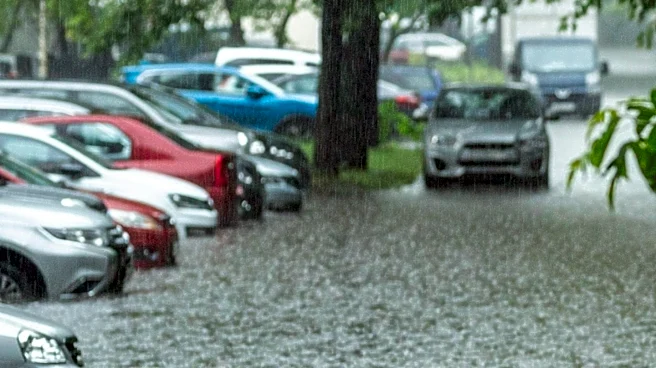
flooding caused by excessive rainfall. The NWS San Diego CA indicated that minor flooding is occurring in low-lying and poor drainage areas, with water present over roadways. Residents are urged to exercise caution, particularly at night when flood dangers are harder to recognize. The NWS emphasizes the critical safety message: "Turn around, don't drown when encountering flooded roads. Most flood deaths occur in vehicles." This advisory highlights the immediate risks associated with heavy rainfall and the potential for rapid water accumulation in susceptible areas.
Why It's Important?
The flood advisory in Riverside County and surrounding areas underscores the immediate public safety concerns posed by heavy rainfall. Flooding can lead to dangerous road conditions, making travel hazardous and potentially isolating communities. The NWS warning about flood-related deaths in vehicles highlights the critical importance of adhering to safety guidelines. Beyond immediate safety, such events can cause significant disruption to daily life, including commuting, school operations, and local businesses. Infrastructure, particularly drainage systems, can be overwhelmed, leading to property damage and increased costs for local municipalities. The repeated occurrence of such advisories points to a broader challenge in managing urban runoff and protecting communities from the impacts of severe weather events, which can have long-term economic and social consequences for the affected regions.
What's Next?
The flood advisory was in effect for a limited period, but the NWS provides general recommendations for staying safe during heavy rain and potential flooding. These include seeking higher ground, adhering to evacuation orders, disconnecting utilities if time permits, and avoiding basements or submerged areas with electrical outlets. For drivers, the NWS advises maintaining safe distances, slowing down, choosing middle lanes, activating headlights for visibility, and being aware of slippery roads, especially during the first half-hour of rain. If rain severely limits visibility, pulling over to a safe location is recommended. These guidelines are crucial for residents to follow to mitigate risks during and after heavy rainfall events. Local authorities will continue to monitor weather conditions and issue further advisories or warnings as needed, emphasizing preparedness and informed decision-making.
Beyond the Headlines
The recurring need for flood advisories in Southern California, even for 'minor' flooding, points to a systemic vulnerability in urban environments to intense rainfall. The NWS's emphasis on avoiding driving through floodwaters, noting that just 12 inches of rushing water can carry away most cars, reveals a critical public education challenge. Despite frequent warnings, many individuals still underestimate the danger. This situation highlights the broader societal implications of climate patterns that may lead to more intense, albeit localized, rainfall events. It prompts questions about the adequacy of existing urban planning, drainage infrastructure, and emergency response protocols in rapidly developing regions. The long-term trend suggests a need for continuous investment in resilient infrastructure and public awareness campaigns to adapt to changing weather patterns and minimize risks to life and property.