







What's Happening?
President Trump announced that he will soon decide whether to lift sanctions on Chinese companies purchasing Iranian oil. This decision is part of the U.S.'s 'maximum pressure' campaign against Iran, aimed at cutting off its revenue streams. Earlier this
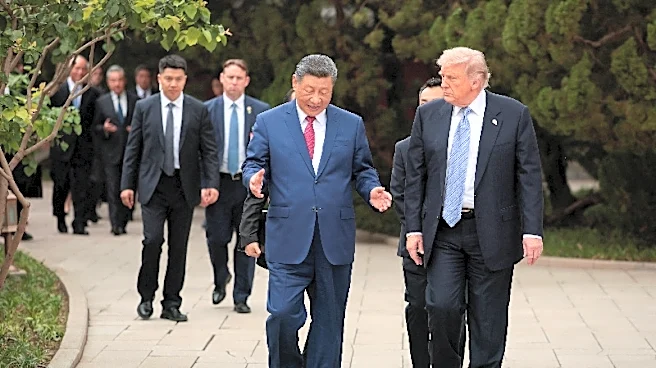
year, the U.S. sanctioned several Chinese refineries, including Hengli Petrochemical, for importing Iranian oil. These refineries often use a 'shadow fleet' of tankers to evade detection, employing tactics like disabling tracking systems and conducting ship-to-ship transfers. The decision follows President Trump's recent visit to China, where discussions about the sanctions took place.
Why It's Important?
The decision on whether to maintain or lift sanctions on Chinese companies is crucial for U.S.-China relations and the global oil market. Maintaining sanctions could strain diplomatic ties with China, a major global economic player, and impact international trade dynamics. Conversely, lifting sanctions might be seen as a concession, potentially weakening the U.S.'s stance in its broader geopolitical strategy against Iran. The outcome will also affect global oil prices and supply chains, as China's demand for oil is significant. The decision reflects the complex interplay between economic interests and geopolitical strategies.
What's Next?
If President Trump decides to lift the sanctions, it could lead to a temporary easing of tensions between the U.S. and China. However, it may also prompt criticism from those who support a hardline approach against Iran. If the sanctions remain, China may seek alternative strategies to secure its oil supply, potentially involving other international partners. The decision will likely influence future negotiations and trade agreements between the U.S. and China, as well as impact the global oil market. Observers will be watching for any shifts in U.S. foreign policy priorities following this decision.