
What's Happening?
Blue Origin successfully completed a historic suborbital flight on December 20, 2025, marking a significant milestone in commercial spaceflight. The mission, known as NS-37, launched from Blue Origin's
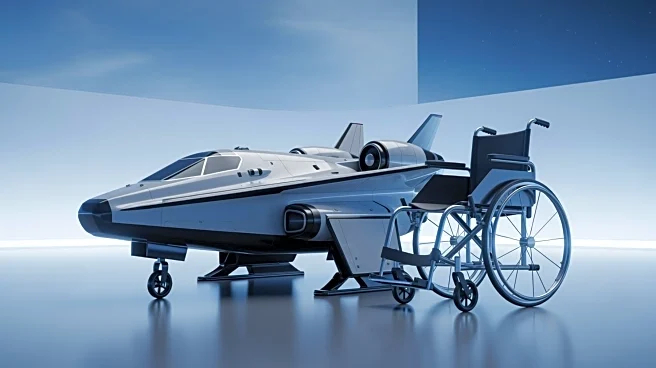
West Texas site at 9:15 a.m. EST, carrying six individuals aboard the New Shepard rocket. Among the crew was aerospace engineer Michi Benthaus, who became the first wheelchair user to travel to space and return safely to Earth. The flight lasted approximately 10 to 12 minutes, reaching the Kármán line at an altitude of 62 miles, which is widely recognized as the boundary of space. The mission provided passengers with a brief period of weightlessness before the capsule descended and landed in the Texas desert. This mission is part of Blue Origin's ongoing space tourism initiative, which includes both crewed and uncrewed research flights.
Why It's Important?
This mission represents a significant advancement in making space travel more inclusive and accessible. By sending the first wheelchair user to space, Blue Origin is breaking barriers and setting a precedent for future space missions to accommodate individuals with disabilities. This development could inspire other aerospace companies to consider accessibility in their designs and operations. Additionally, the mission underscores the growing role of private companies in expanding access to space, offering opportunities for both scientific research and personal exploration. The success of this mission may encourage further investment and innovation in the commercial space sector, potentially leading to more frequent and diverse space travel opportunities.
What's Next?
Blue Origin plans to continue its space tourism program, scheduling future missions for both research payloads and human passengers using the New Shepard system. The company has not disclosed ticket prices, but the success of the NS-37 mission may increase interest and demand for these flights. As private space travel becomes more common, regulatory bodies and industry stakeholders may need to address new challenges related to safety, accessibility, and environmental impact. The inclusion of individuals with disabilities in space missions could also prompt further research into adaptive technologies and training programs to support diverse astronaut candidates.