





What's Happening?
A NASA-funded air pollution monitoring network is providing detailed, long-term insights into black carbon and PM2.5 levels in Addis Ababa, Ethiopia. The Multi-Angle Imager for Aerosols (MAIA) project, established in 2022, uses 10 ground-based air quality
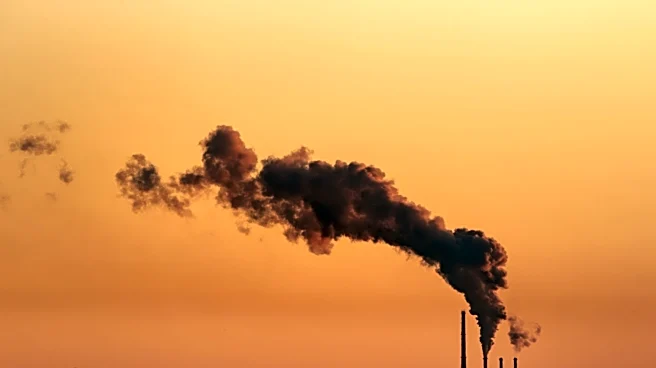
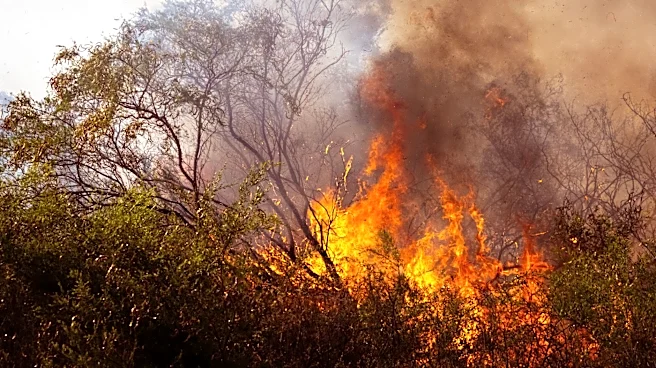
monitoring sites to track pollution changes by time of day and season. The research has identified significant increases in black carbon during holidays involving bonfires and can differentiate between particles from fires and fossil fuel combustion. The study found that Addis Ababa's three-year average PM2.5 concentration was 30 micrograms per cubic meter, more than three times the U.S. Environmental Protection Agency’s annual standard. Black carbon levels in Addis Ababa were also found to be approximately four to nine times higher than those measured in the three U.S. metropolitan areas monitored by MAIA: Los Angeles, Atlanta, and Boston. Ethiopia has taken steps to improve air quality, including banning the import of internal combustion engine vehicles in 2024. The MAIA mission will also include a space observatory with a JPL-built camera, set to launch no earlier than late 2027, to further map particle concentrations and study their relationship with health outcomes.
Why It's Important?
This research is crucial for understanding the sources and impacts of air pollution, particularly PM2.5 and black carbon, which are linked to approximately 4.9 million deaths globally each year. The detailed measurements provide a baseline for evaluating the effectiveness of air quality improvement initiatives in rapidly growing cities like Addis Ababa. For the U.S., the comparison of black carbon levels highlights the varying degrees of air pollution challenges across different urban environments and underscores the importance of continuous monitoring. The MAIA mission's integration of ground sensors and satellite observations represents a significant advancement in air quality research, offering a more comprehensive understanding of particulate matter pollution. This improved understanding can inform public health policies and environmental regulations, potentially leading to better air quality management strategies and reduced health risks for populations in affected areas, including U.S. cities.
What's Next?
The MAIA mission plans to launch its space observatory, equipped with a JPL-built camera, no earlier than late 2027. This satellite will enhance the ground-based sensor network by providing detailed maps of PM2.5 concentrations and identifying different types of aerosols based on how they reflect light. The mission will continue to monitor air quality in a dozen metropolitan areas globally, including Los Angeles, Atlanta, and Boston in the U.S. Public health researchers on the MAIA team will use the PM2.5 concentration maps in conjunction with health data to investigate potential relationships between specific particle types and health outcomes. This ongoing research aims to advance the scientific understanding of air quality and its management, potentially influencing future environmental policies and public health interventions in the U.S. and internationally.
Beyond the Headlines
The MAIA project's findings underscore the complex interplay between urbanization, energy consumption, and public health. The ability to distinguish between different sources of particulate matter, such as bonfires versus fossil fuel combustion, provides critical data for targeted interventions. The project also highlights the global nature of air pollution challenges, demonstrating how lessons learned in one region, like Addis Ababa, can be relevant to others, including U.S. cities. The long-term monitoring approach is essential for tracking the efficacy of policy changes, such as Ethiopia's ban on internal combustion engine vehicle imports. Furthermore, the inclusion of public health researchers directly within a space mission team signifies a growing recognition of the direct link between environmental science and human well-being, paving the way for more integrated research approaches to global health issues.