




What's Happening?
A broken sewer pipe in Palm Desert has led to substantial traffic congestion, particularly on Washington Street around Fred Waring Drive. The Coachella Valley Water District (CVWD) is actively working to repair the damaged pipe, but officials have indicated
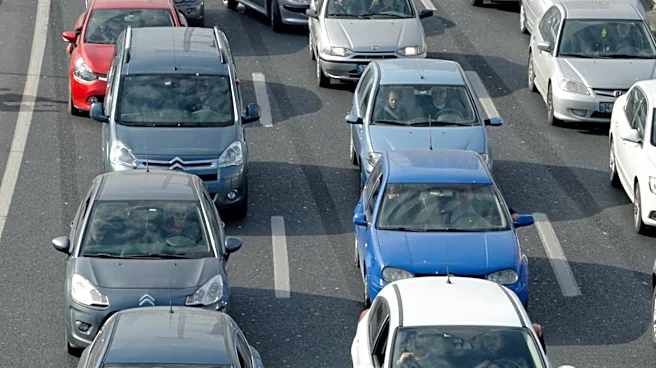
that the repairs could take several days to complete. As a result, drivers are experiencing significant backups in both southbound and northbound directions on Washington Street. The city of Palm Desert has advised motorists to avoid the affected area if possible to mitigate further delays and allow repair crews to work efficiently. This incident highlights the disruptive impact that unexpected infrastructure failures can have on daily commutes and local transportation networks.
Why It's Important?
This incident in Palm Desert underscores the critical importance of maintaining and upgrading urban infrastructure, particularly underground utility systems. A single point of failure, such as a broken sewer pipe, can cascade into widespread traffic disruptions, affecting residents' daily lives, local businesses, and emergency services. For commuters, prolonged delays mean lost time, increased fuel consumption, and potential impacts on work schedules. Local businesses in the vicinity may experience reduced customer traffic due to accessibility issues, leading to economic losses. Furthermore, the incident highlights the need for robust contingency plans and effective communication strategies from local authorities to inform the public and manage traffic flow during such emergencies. The duration of the repairs also points to the complexity and time-consuming nature of addressing subterranean infrastructure problems.
What's Next?
The Coachella Valley Water District will continue its efforts to repair the broken sewer pipe, with the expectation that the work will span several days. During this period, traffic congestion on Washington Street near Fred Waring Drive is likely to persist, and drivers should continue to seek alternative routes. Local authorities will likely maintain advisories and updates regarding the repair progress and traffic conditions. Once the pipe is repaired, the focus will shift to restoring the affected roadways and ensuring the long-term integrity of the sewer system to prevent future occurrences. This event may also prompt a review of infrastructure maintenance schedules and emergency response protocols within the city and the water district to enhance preparedness for similar incidents.
Beyond the Headlines
Beyond the immediate traffic woes, this incident in Palm Desert sheds light on the broader issue of aging infrastructure across many U.S. cities. Many underground utility systems, including water and sewer pipes, are decades old and are increasingly susceptible to failures due to age, material degradation, and increased strain from population growth. Such events serve as a stark reminder of the continuous investment required to maintain essential public services. The cost of proactive maintenance and upgrades often competes with other municipal priorities, but the economic and social costs of reactive repairs, like the current traffic disruption, can be substantial. This situation could spark discussions about long-term infrastructure funding, the adoption of advanced monitoring technologies to detect potential failures early, and the development of more resilient urban systems to minimize disruptions from unforeseen events.