







What's Happening?
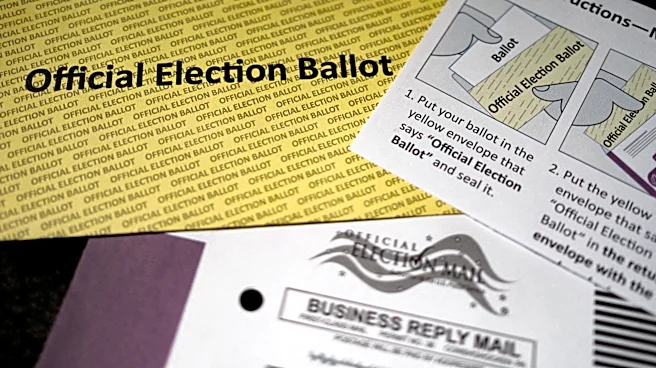
Reproductive Freedom for All and Senate Majority PAC have initiated a $250,000 mail campaign targeting Senator Susan Collins in Maine. The campaign, reaching over 100,000 households, criticizes Senator Collins for her 2018 vote to confirm Brett Kavanaugh
to the Supreme Court and her support for over 100 judges appointed by President Trump. Abortion-rights advocates argue that these actions have undermined reproductive access. This effort is part of a larger national initiative called 'My Body. My Ballot,' which has a budget of $23.5 million. Planned Parenthood is also contributing to this push, spending approximately $600,000 on advertisements in Maine to highlight Senator Collins' connection to the overturning of Roe v. Wade. Senator Collins' team has labeled these groups as partisan, asserting that she has consistently been pro-choice. The campaign also draws a contrast between Senator Collins and Democratic nominee Troy Jackson, who, despite previously opposing abortion rights, now supports expanded access, with advocates framing his stance as having 'evolved' while Senator Collins' has 'devolved.'
Why It's Important?
This campaign is significant as it directly impacts one of the country's most closely contested Senate races, highlighting the enduring political salience of reproductive rights. The substantial financial investment by abortion-rights groups underscores their commitment to influencing electoral outcomes by holding politicians accountable for past judicial appointments. For Senator Collins, a moderate Republican, the renewed focus on her Kavanaugh vote could jeopardize her re-election prospects, particularly in a state where reproductive rights are a key issue for many voters. The framing of Democratic nominee Troy Jackson's 'evolution' on abortion rights versus Senator Collins' 'devolution' aims to sway undecided voters and energize the Democratic base. This situation reflects a broader national trend where judicial appointments, especially those to the Supreme Court, have become central to electoral campaigns, demonstrating the long-term consequences of such decisions on public policy and political careers. The outcome of this race could also influence the balance of power in the Senate, affecting future legislative efforts related to reproductive healthcare.
What's Next?
The mail campaign is expected to continue reaching Maine households, intensifying pressure on Senator Collins as the election approaches. Both Reproductive Freedom for All and Planned Parenthood will likely maintain their advertising efforts, potentially expanding their reach and messaging to further influence public opinion. Senator Collins' campaign will need to counter these accusations, likely by reiterating her 'pro-choice' stance and emphasizing other aspects of her legislative record. The Democratic nominee, Troy Jackson, will likely leverage the campaign's narrative to highlight his current support for expanded abortion access. The broader 'My Body. My Ballot' initiative suggests that similar campaigns could be launched in other tight races across the country, indicating a sustained focus on reproductive rights in the upcoming elections. The effectiveness of these campaigns will be closely watched as a barometer for how judicial decisions, particularly on sensitive issues like abortion, translate into electoral consequences.
Beyond the Headlines
This campaign delves into the deeper implications of judicial appointments on democratic processes and public trust. The accusation that Senator Collins 'undermined reproductive access' by supporting judicial nominees, despite her stated pro-choice position, highlights the complex interplay between a politician's personal views, their voting record on judicial appointments, and the ultimate impact of those appointments on fundamental rights. It raises questions about the long-term accountability of elected officials for the consequences of their decisions, particularly when those consequences are not immediately apparent. Furthermore, the campaign's focus on 'evolution' versus 'devolution' in political stances on abortion rights reflects a societal shift in how these issues are perceived and debated, moving beyond simple labels to scrutinize the practical effects of policy and judicial actions. This dynamic could lead to a re-evaluation of how voters assess candidates, prioritizing the tangible outcomes of their decisions over stated positions, and potentially reshaping political discourse around judicial independence and legislative responsibility.