








What's Happening?
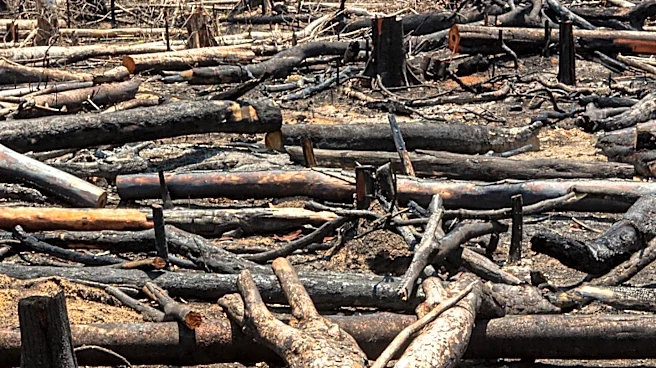
Recent data from the Brazilian Amazon indicates a significant reduction in deforestation, reaching its lowest level in a decade. Between August 2025 and July 2026, approximately 2,874 square kilometers of forest were cleared, marking a 37% decrease compared
to the previous year. This decline is attributed to the current administration's intensified efforts to combat illegal land clearing, a stark contrast to the previous administration's policies. The data, collected by Brazil's National Institute for Space Research (INPE), highlights the impact of President Luiz Inacio Lula da Silva's environmental policies. Lula, who is seeking re-election, has committed to eradicating illegal deforestation by 2030. The reduction in deforestation is seen as a positive step towards achieving this goal.
Why It's Important?
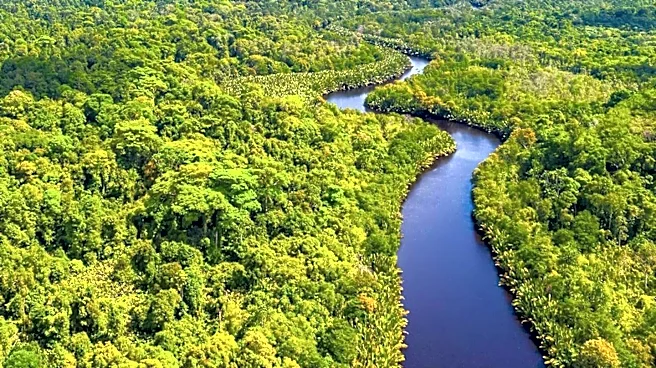
The reduction in deforestation in the Amazon is crucial for global climate stability, as the rainforest plays a vital role in carbon sequestration. This development is significant for Brazil's international relations, particularly in light of recent trade tensions with the United States. President Trump's administration imposed additional tariffs on Brazilian products, citing deforestation as a reason. The decrease in deforestation could improve Brazil's environmental reputation and potentially ease trade relations. Moreover, the success of Lula's policies may influence other nations' environmental strategies, highlighting the importance of political will in addressing climate change.
What's Next?
Looking forward, the Brazilian government aims to maintain and further reduce deforestation rates. The upcoming release of official deforestation data in November will provide a more comprehensive view of the situation. As Lula seeks re-election, his environmental policies will likely be a focal point of his campaign. The international community will be watching closely, as Brazil's actions have significant implications for global climate efforts. Continued monitoring and enforcement of anti-deforestation measures will be essential to sustain the progress made.