




What's Happening?
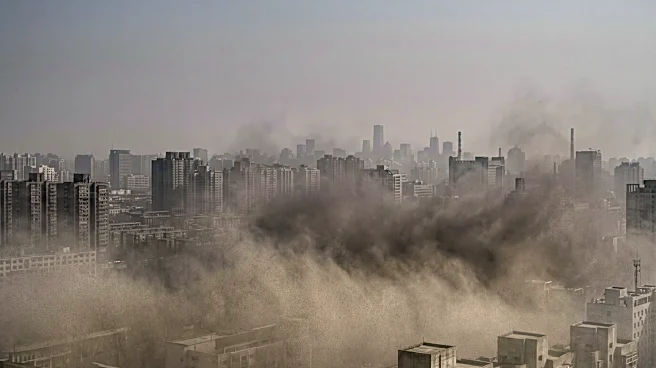
New Delhi is currently experiencing 'very poor' air quality, with thick smog blanketing the Indian capital. The citywide air quality index (AQI) reached 379 at 10 a.m. on Wednesday, placing it near the highest level of what India classifies as 'very poor.'
Data from the Central Pollution Control Board indicates that the average concentration of fine particulate matter, which can penetrate lungs and enter the bloodstream, hit 277. This level is more than 18 times the 24-hour limit recommended by the World Health Organization. This deterioration in air quality comes just a week before the Diwali festival, a period when firecrackers typically exacerbate the existing haze. The current situation marks a significant reversal from October, which had the cleanest air in eight years, with an AQI of 166, attributed to unusually heavy rains and favorable airflow that helped disperse pollutants.
Why It's Important?
The severe air pollution in New Delhi has significant public health implications for its residents. Exposure to high levels of fine particulate matter can lead to various respiratory and cardiovascular diseases, increasing hospitalizations and mortality rates. For the U.S., while not directly impacted by New Delhi's air quality, such environmental crises in major global cities highlight broader challenges in urban planning, industrial regulation, and public health management that resonate internationally. U.S. companies operating in India or with employees based there may face operational challenges, including health and safety concerns for their workforce. The event also underscores the global interconnectedness of environmental issues and the potential for shared learning in pollution control strategies, influencing international collaborations on climate and health initiatives.
What's Next?
As the Diwali festival approaches, the air quality in New Delhi is anticipated to worsen further due to the traditional use of firecrackers. Local authorities may implement emergency measures, such as vehicle rationing or restrictions on construction activities, to mitigate the pollution. Public health advisories are likely to be issued, urging residents to stay indoors and take protective measures. The long-term outlook involves ongoing efforts to address the root causes of pollution, including industrial emissions, vehicular exhaust, and agricultural stubble burning in surrounding regions. International organizations and environmental groups will likely continue to monitor the situation and advocate for more stringent environmental policies and their enforcement.
Beyond the Headlines
The recurring severe air pollution in New Delhi points to deeper systemic issues beyond seasonal factors. It highlights the complex interplay between rapid urbanization, industrial growth, agricultural practices, and environmental regulation in developing economies. The challenge extends to balancing economic development with environmental sustainability, often leading to difficult policy choices. Culturally, the tradition of Diwali celebrations, while deeply ingrained, faces increasing scrutiny due to its environmental impact, prompting discussions about alternative, eco-friendlier ways to observe the festival. This situation also raises questions about environmental justice, as vulnerable populations often bear a disproportionate burden of pollution's health effects, and the effectiveness of governance in implementing and enforcing environmental protection laws.