







What's Happening?
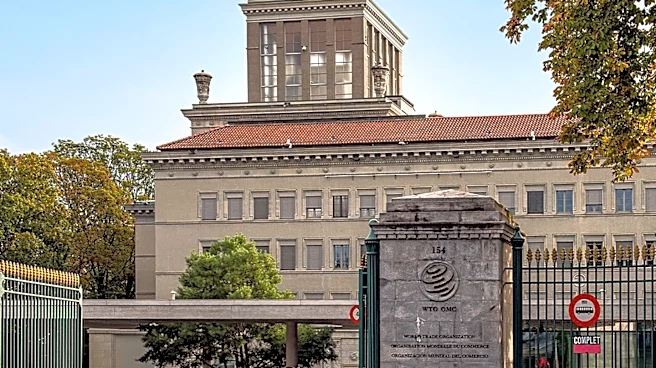
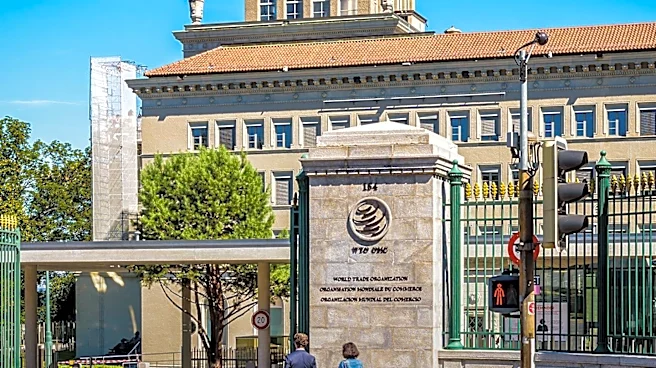
Members of the World Trade Organization (WTO) are engaged in discussions about necessary structural reforms to the global trade system. There is a consensus on the need for reform, but opinions diverge on the specifics. Experts Dan Esty and Mari Pangestu
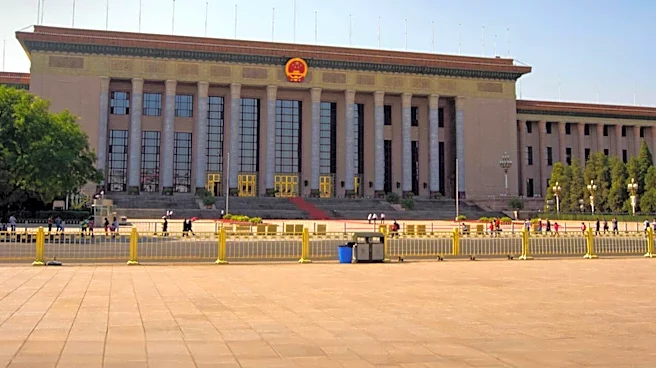
suggest that a recommitment to sustainable development should be a primary focus. The debate comes amid broader discussions on global governance, with China asserting its leadership aspirations. The rise of artificial intelligence (AI) and its implications for fiscal policy are also being examined, highlighting the intersection of technology and economic policy. Additionally, energy shocks and inflation pose challenges for monetary policy, as noted in a recent BIS Bulletin.
Why It's Important?
The discussions on WTO reform are crucial as they address the evolving needs of the global trade system in the face of technological advancements and geopolitical shifts. A focus on sustainable development could align trade policies with environmental and social goals, potentially leading to more equitable economic growth. The rise of AI presents both opportunities and challenges for fiscal policy, influencing productivity, job markets, and income distribution. As countries navigate energy shocks and inflation, the role of monetary policy becomes increasingly complex, impacting global economic stability. These discussions reflect the interconnected nature of trade, technology, and governance in shaping future economic landscapes.
What's Next?
The WTO's path to reform will likely involve continued negotiations among member states to reconcile differing priorities and approaches. The emphasis on sustainable development may lead to new trade agreements that incorporate environmental and social considerations. As AI continues to influence economic policy, governments may need to adapt fiscal strategies to harness its benefits while mitigating potential disruptions. The ongoing challenges of energy shocks and inflation will require coordinated monetary policy responses to maintain economic stability. These developments will be closely watched by policymakers, businesses, and civil society as they navigate the complexities of a rapidly changing global economy.