







What's Happening?
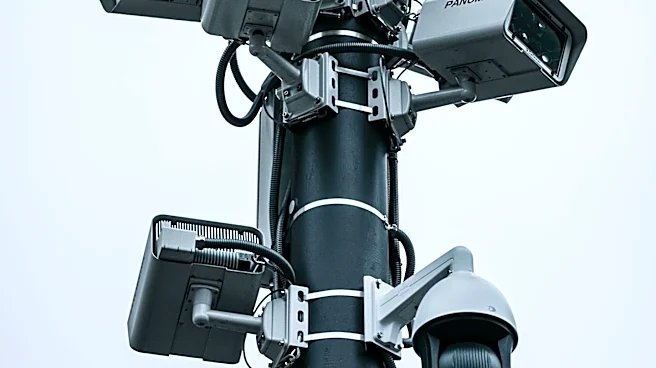
U.S. Rep. Marlin Stutzman (R-IN-3) is actively developing federal legislation aimed at limiting or eliminating the government's deployment of Flock-style surveillance networks on public roads. Stutzman argues that these automated license plate readers
(ALPRs) constitute unconstitutional government surveillance due to their extensive data collection capabilities. He highlighted that over 200,000 such cameras are already in operation nationwide, capturing information such as vehicle make and model, time of passage, and potentially occupants. This initiative comes as a response to growing privacy concerns, with several Indiana cities and counties, including Fort Wayne, already opting to terminate their contracts with Flock. The debate surrounding these cameras has also reached Capitol Hill, with a Senate Judiciary Subcommittee examining private surveillance networks and hearing testimony from individuals who claim wrongful incarceration due to ALPR data.
Why It's Important?
The proposed federal legislation by U.S. Rep. Stutzman addresses significant concerns regarding privacy rights and government overreach in the digital age. The widespread use of ALPRs by law enforcement and third-party entities raises questions about the balance between public safety and individual liberties. While proponents argue these cameras are vital tools for crime fighting, locating stolen vehicles, and finding missing persons, critics, including Stutzman, contend that the vast amount of data collected creates a comprehensive surveillance network that could be misused. The potential for wrongful arrests, as highlighted by testimony before the Senate subcommittee, underscores the real-world impact of flawed or unchecked surveillance technology. This legislative effort could set a precedent for how emerging surveillance technologies are regulated at a federal level, influencing data privacy policies and the scope of government monitoring across the United States.
What's Next?
U.S. Rep. Stutzman will continue to collaborate with other lawmakers to refine and advance his proposed federal legislation. The bill's progression will likely involve further hearings, debates, and potential amendments in Congress. Stakeholders, including privacy advocates, civil liberties organizations, law enforcement agencies, and technology companies like Flock Safety, are expected to engage in the legislative process, presenting their perspectives and lobbying efforts. The outcome of this legislation could lead to new federal guidelines or restrictions on the use of ALPRs, potentially impacting existing contracts between municipalities and surveillance technology providers. Furthermore, the ongoing public discourse and legal challenges surrounding these technologies may influence future policy decisions at both federal and local levels, shaping the future of surveillance in the U.S.
Beyond the Headlines
The legislative push against Flock-style surveillance networks delves into deeper ethical and societal implications concerning the nature of privacy in an increasingly monitored society. The collection of vast amounts of data on citizens' movements, even in public spaces, blurs the lines between legitimate law enforcement tools and pervasive surveillance. This debate touches upon the fundamental right to privacy and the potential for such data to be aggregated, analyzed, and potentially misused, leading to a 'chilling effect' on civil liberties. The absence of technology executives from the Senate subcommittee hearing, as noted by Chairman Josh Hawley, highlights a broader challenge in regulating rapidly evolving technologies: ensuring accountability and transparency from private companies that develop and deploy these powerful tools. The discussion extends beyond just ALPRs to the broader implications of AI-powered surveillance and the need for robust legal frameworks to protect individual rights in the face of technological advancements.