




What's Happening?
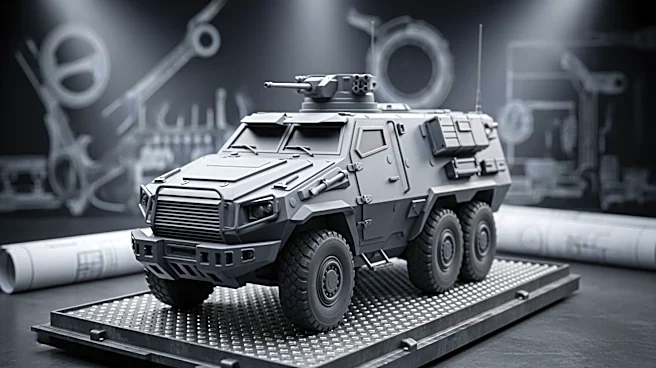
The Marine Corps has initiated a second prototyping phase for its Advanced Reconnaissance Vehicle (ARV) program, intensifying competition between General Dynamics Land Systems and Textron Systems. Announced on April 1, the program involves the development
of three pre-production ARV variations by 2028, including a command and control model with drone capabilities, a 30mm autocannon variant, and a logistics model. This initiative aims to replace the aging Light Armored Vehicle (LAV) platform, which has been in service since the 1980s. The ARV program is part of the Marine Corps' broader Force Design restructuring, which seeks to enhance the service's capabilities in global conflicts. Both companies are leveraging modular designs to meet the Marine Corps' requirements for a versatile, amphibious reconnaissance vehicle.
Why It's Important?
The ARV program is crucial for modernizing the Marine Corps' reconnaissance capabilities, aligning with the Force Design restructuring to create a more agile and technologically advanced force. The competition between General Dynamics and Textron highlights the significant financial stakes, with billions of dollars on the line. The successful development of the ARV will enhance the Marine Corps' ability to operate in complex, data-driven environments, providing a strategic advantage in future conflicts. The program also reflects the military's increasing reliance on advanced technology and modular designs to maintain operational superiority.
What's Next?
The next steps involve continued prototype evaluations and testing by both General Dynamics and Textron. The Marine Corps will assess the performance of the prototypes to determine the final contract award. The companies are expected to deliver production representative systems for extensive testing, with Textron already preparing its production line for full-rate output. The outcome of this competition will shape the future of the Marine Corps' reconnaissance capabilities and influence the broader defense industry's approach to vehicle design and production.