







What's Happening?
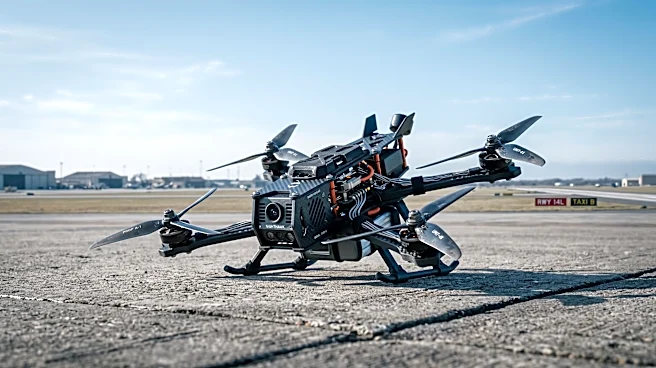
Ukraine is actively seeking and testing more economical methods to counter Russia's advanced jet-powered drones, which are increasingly being deployed. These new Russian drones can fly at speeds exceeding 600 kmph (350 mph), making them more challenging
to intercept and akin to low-cost cruise missiles. While Ukraine has enhanced its interception capabilities using fighter jets and sophisticated air-defense systems, the cost of shooting down these drones often surpasses their production price. To address this economic imbalance and find a sustainable solution, Ukraine's military is now evaluating inexpensive interceptor drones. This strategic shift aims to maintain effective air defense without incurring prohibitive costs in the ongoing conflict.
Why It's Important?
The development and deployment of jet-powered drones by Russia, and Ukraine's response, highlight a critical evolution in modern warfare, particularly concerning cost-effectiveness in defense. The high speed and cruise missile-like characteristics of these drones present a significant challenge to traditional air defense systems, which are often more expensive to operate per engagement. Ukraine's focus on low-cost interceptor drones could set a precedent for future military strategies globally, emphasizing the need for affordable countermeasures against increasingly sophisticated yet mass-produced aerial threats. This dynamic impacts defense budgets, technological innovation in military hardware, and the strategic balance in conflicts where drone warfare plays a central role. The ability to neutralize threats economically is crucial for sustained defense efforts.
What's Next?
Ukraine is expected to continue its testing and development of low-cost interceptor drones, with potential for wider deployment if successful. This initiative could lead to increased investment in drone technology and counter-drone systems by other nations facing similar threats. The ongoing adaptation by both sides in the conflict, with Russia deploying faster drones and Ukraine developing cheaper interceptors, suggests a continuous cycle of innovation in drone warfare. Future developments may include further advancements in drone speed, stealth, and swarm capabilities, alongside corresponding innovations in interception and electronic warfare. The effectiveness of these new Ukrainian interceptors will be closely watched as a model for future defense strategies.
Beyond the Headlines
The shift towards low-cost interceptor drones by Ukraine underscores a broader trend in military technology: the democratization of aerial warfare. As drone technology becomes more accessible and sophisticated, the traditional advantage held by nations with advanced air forces is being challenged. This development raises ethical questions about the proliferation of autonomous weapons systems and the potential for increased civilian casualties in conflicts. Legally, the use of such drones and their countermeasures will likely prompt new discussions on international arms control treaties and the laws of armed conflict. Culturally, the image of warfare is evolving from large-scale conventional battles to more asymmetric engagements dominated by unmanned aerial vehicles, impacting public perception and military recruitment.