



What's Happening?
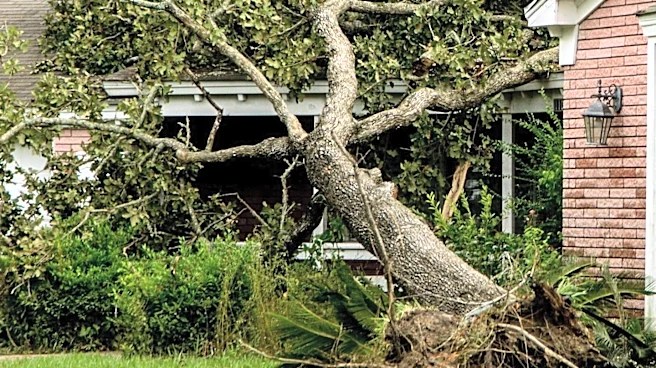
A Racine resident, Nicole Maiwald, has expressed concern regarding the City of Racine's response time to remove a hazardous tree after a large branch fell onto Rapids Drive, damaging a vehicle. Maiwald had previously contacted the city earlier this year
about the tree, which is city property, noting that its branches were separating. City of Racine Communications Director Shannon Powell confirmed that city inspectors visited the site twice in April but deemed the tree to be in good condition. Despite this, a significant branch failure occurred last week, during a day of consistent rain, resulting in damage to a passing car with two children inside. Maiwald reported that a notice was subsequently placed on her door indicating the tree's removal. The city has confirmed it is currently obtaining quotes for the tree's removal, with an estimated completion by the end of the month or early November.
Why It's Important?
This incident highlights critical issues concerning public safety, municipal responsibility, and the effectiveness of urban forestry management. The resident's prior warnings, coupled with the city's assessment that the tree was in good condition, raise questions about the adequacy of current inspection protocols and the criteria used to evaluate tree health and potential hazards. The delay in addressing a known concern, which ultimately led to property damage and potential injury, underscores the importance of proactive maintenance and timely response in urban environments. For residents, this situation can erode trust in municipal services and create anxieties about unaddressed public hazards. For the city, it presents a challenge to review and potentially revise its tree management policies, resource allocation for maintenance, and communication strategies with concerned citizens to prevent future incidents and mitigate liability.
What's Next?
The City of Racine is in the process of securing quotes for the removal of the hazardous tree, with an anticipated completion by the end of October or early November. This immediate action addresses the specific hazard. However, the broader implications suggest a potential review of the city's Forestry Division operations. Residents with concerns about trees are encouraged to contact the city's Forestry Division directly by phone, submit a service request online, or send an email. Requests can also be channeled through an alderperson or the mayor's office, which will forward them to the Forestry Division. According to Communications Director Shannon Powell, a typical report is usually resolved within two weeks, suggesting that the city aims for a more prompt resolution for such issues.
Beyond the Headlines
The incident in Racine transcends a simple tree removal issue, touching upon the complex legal and ethical dimensions of municipal liability and public safety. When a city owns property, including trees in the right-of-way, it assumes a duty of care to maintain that property to prevent harm to the public. The resident's prior notification and the city's subsequent assessment of 'good condition' could become a point of contention in any potential legal claims for damages. This scenario often forces municipalities to balance budget constraints with the imperative of public safety, leading to difficult decisions about resource allocation for preventative maintenance versus reactive measures. Furthermore, it highlights the psychological impact on residents who feel their concerns are not adequately addressed, potentially fostering a sense of vulnerability within their community. The incident serves as a case study for urban planning and risk management, emphasizing the need for comprehensive, transparent, and responsive systems for managing public infrastructure.