



What's Happening?
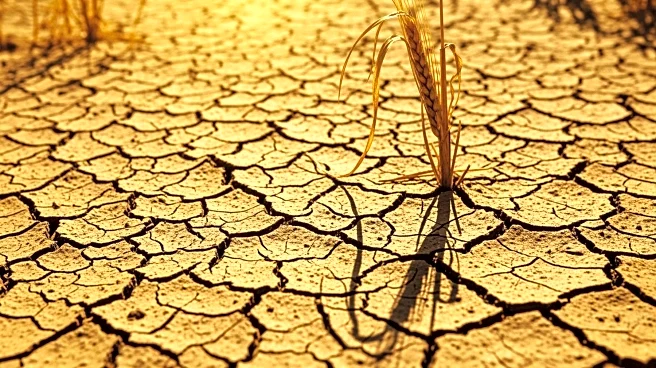
Argentina is currently experiencing a severe heat wave, with temperatures reaching nearly 104°F (40°C), which is significantly impacting its agricultural sector. The heat and dry conditions are particularly affecting corn and soybean crops, with the potential
to reduce yields for the 2025/26 season. Argentina is a major global exporter of soy meal, soy oil, and corn, making these developments particularly concerning. Meteorologist German Heinzenknecht has indicated that the core farming regions, especially in the south of Santa Fe province and north of Buenos Aires province, require substantial rainfall to mitigate the damage. Farmers have reported visible damage to crops, with corn showing a lack of kernels and soybeans heavily dependent on imminent rainfall. The drought is also affecting the cattle industry, with pastures and forage crops suffering, leading to lower than expected sorghum yields.
Why It's Important?
The agricultural challenges in Argentina have significant implications for global markets, particularly in the U.S., which competes in the same export markets. Reduced yields in Argentina could lead to increased demand for U.S. agricultural products, potentially benefiting American farmers. However, the situation also highlights the vulnerability of global food supply chains to climate-related disruptions. The drought and heat wave underscore the need for adaptive strategies in agriculture to cope with extreme weather conditions, which are becoming more frequent due to climate change. The economic impact on Argentina could also affect its trade relationships and economic stability, influencing global commodity prices.
What's Next?
The immediate focus for Argentine farmers is on the weather forecast, with hopes pinned on potential rainfall in the coming days. If significant rain does not materialize, further reductions in crop yield estimates are likely. This could prompt a reassessment of global supply forecasts and potentially lead to increased prices for corn and soy products. The Argentine government and agricultural bodies may need to consider support measures for affected farmers. Internationally, markets will be watching closely for any shifts in export patterns or pricing that could affect global supply chains.