






What's Happening?
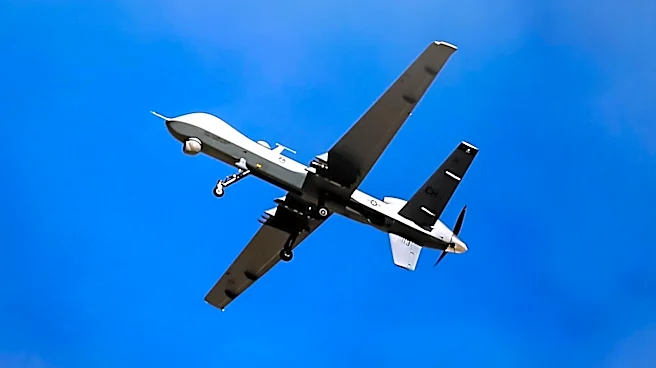
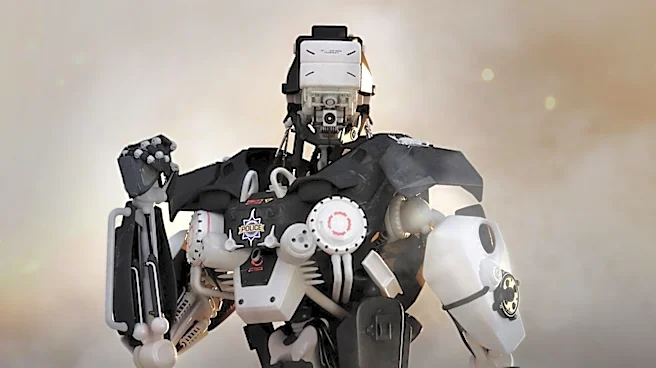
Ukraine has made significant advancements in robotic weapons and drones, as reported by journalists Robert Leslie and Jake Epstein. The technology has become more sophisticated and increasingly relies on artificial intelligence. These advancements allow
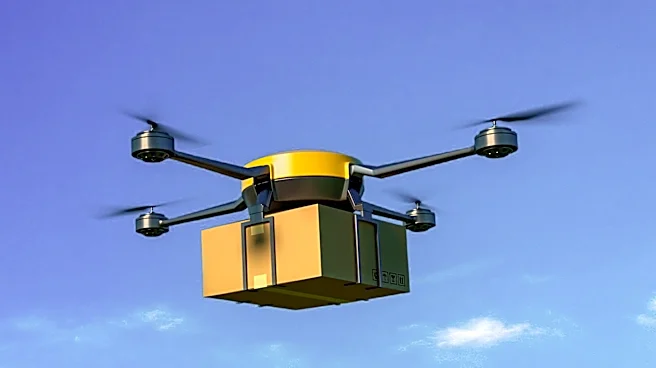
for rapid development and deployment of new iterations of ground, air, and sea drones, which can be designed and battle-tested in weeks. The new technology supports human soldiers by replacing them in dangerous front-line missions, such as retrieving wounded soldiers and transporting supplies. Additionally, large bomber drones are being used to deliver essential goods to the front lines.
Why It's Important?
The advancements in Ukraine's robotic weapons and drones have significant implications for military strategy and defense technology. The rapid development and deployment capabilities could change the dynamics of warfare, allowing for more efficient and safer operations. The use of AI in these technologies raises questions about the future of autonomous weapons and their ethical implications. The ability to perform dangerous missions without risking human lives could lead to a shift in military tactics and reduce casualties. However, the reliance on AI also poses challenges in terms of control and accountability in warfare.
What's Next?
As Ukraine continues to develop its robotic weapons and drones, other countries may follow suit, leading to an arms race in autonomous military technology. The international community may need to address the ethical and legal implications of using AI in warfare. Discussions on regulations and treaties governing the use of autonomous weapons could become more prominent. Additionally, the integration of AI in military operations may prompt further research and development in related technologies, potentially influencing global defense strategies.