

What's Happening?
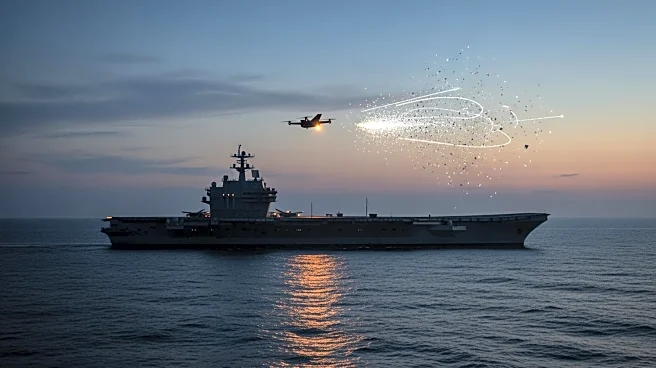
The United States, with support from Jordan, launched a series of military strikes against Islamic State targets in Syria. This action was in retaliation for an attack by a Syrian gunman that resulted in the deaths of two U.S. troops and an American civilian
interpreter. The strikes targeted over 70 locations across central Syria, involving fighter jets, attack helicopters, and artillery. The operation aimed to dismantle Islamic State cells and prevent extremist groups from using these areas as bases for further attacks. The Syrian Observatory for Human Rights reported that at least five individuals, including the leader of an Islamic State cell, were killed. The Jordanian air force participated in the strikes, marking its involvement as part of the global coalition against the Islamic State.
Why It's Important?
This military action underscores the ongoing threat posed by the Islamic State in the region and highlights the U.S.'s commitment to counter-terrorism efforts. The involvement of Jordan signifies regional cooperation in combating extremist groups. The strikes are a direct response to the recent attack that killed U.S. citizens, demonstrating the U.S.'s resolve to protect its personnel and interests abroad. The operation also reflects the broader geopolitical dynamics in the Middle East, where various nations are collaborating to stabilize the region and prevent the resurgence of terrorist groups. The strikes could potentially disrupt Islamic State operations, but they also risk escalating tensions in an already volatile area.
What's Next?
Following the strikes, it is likely that the U.S. and its allies will continue to monitor the situation closely and conduct further operations if necessary. The international community, particularly countries involved in the coalition, may increase their efforts to support stability in Syria. There could be diplomatic discussions aimed at addressing the root causes of extremism in the region. Additionally, the Syrian government, under interim President Ahmad al-Sharaa, may face pressure to enhance its security measures and cooperation with international forces to prevent future attacks.