





What's Happening?
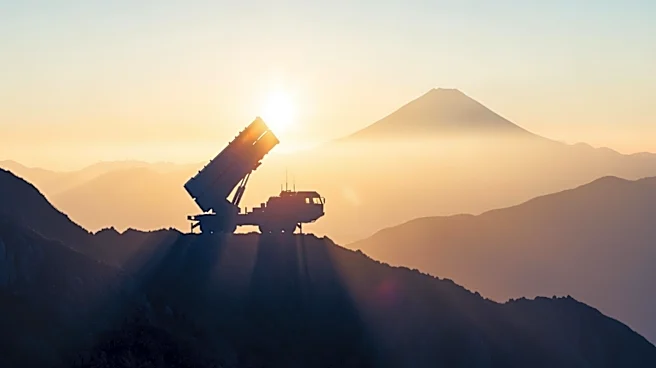
U.S. Marines conducted a live-fire exercise with the High Mobility Artillery Rocket System (HIMARS) near Mount Fuji, Japan. This exercise, which involved firing a dozen rockets, was part of a training to maintain proficiency with a weapon system that
is increasingly significant to the U.S. military. The HIMARS system, known for its 'shoot and scoot' capability, allows for rapid deployment and relocation, making it less vulnerable to counterattacks. The exercise was conducted in coordination with Japanese military forces, and involved the use of dummy projectiles. This marks only the second time HIMARS has been tested at Camp Fuji, emphasizing its growing role in the Pacific region, particularly in deterring potential threats from China.
Why It's Important?
The HIMARS system's deployment in Japan underscores the strategic military collaboration between the U.S. and Japan, aimed at enhancing regional security. The ability of HIMARS to reach targets in the Taiwan Strait is particularly significant given the ongoing tensions between China and Taiwan. This exercise not only demonstrates the U.S. military's commitment to maintaining a strong presence in the Pacific but also serves as a deterrent against potential aggressive actions by China. The collaboration with Japanese forces highlights the importance of allied partnerships in addressing regional security challenges.
What's Next?
Future exercises and deployments of HIMARS in the region are likely as the U.S. continues to bolster its military capabilities in the Pacific. The strategic positioning of such systems could lead to increased military readiness and deterrence against potential threats. Additionally, the U.S. and Japan may explore further military collaborations to enhance their joint defense capabilities. The ongoing geopolitical tensions in the region may prompt further military exercises and strategic deployments.