
What's Happening?
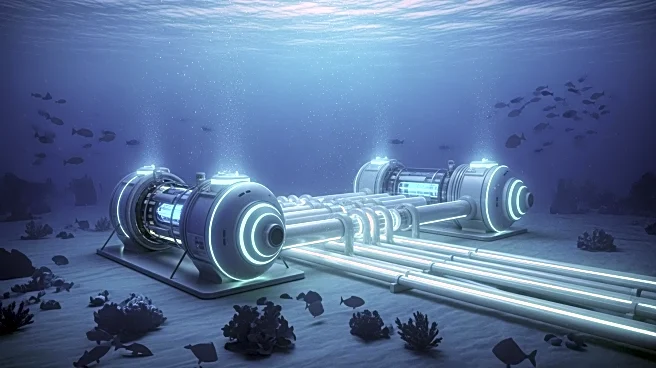
Flocean, a Norwegian company, is set to launch the world's first commercial-scale subsea desalination plant in 2026. This innovative approach aims to significantly reduce the cost and energy consumption
associated with turning seawater into drinkable water. The plant will utilize subsea pods that leverage hydrostatic pressure to filter seawater, reducing the need for energy-intensive pumping. This method is expected to cut energy use by 40 to 50 percent compared to traditional land-based desalination plants. The subsea environment also offers cleaner water, reducing the need for pre-treatment. Flocean's facility, named Flocean One, will initially produce 1,000 cubic meters of fresh water daily, with plans for modular expansion.
Why It's Important?
The development of subsea desalination technology by Flocean could have significant implications for global water supply, particularly in regions facing water scarcity. As fresh water becomes less abundant due to factors like climate change and population growth, innovative solutions like this could provide a more sustainable and cost-effective alternative to traditional desalination methods. If successful, this technology could be deployed in suitable locations worldwide, potentially transforming water supply systems and reducing reliance on energy-intensive processes. The project also highlights the potential for technological advancements to address critical environmental challenges.
What's Next?
Flocean plans to begin production at its subsea desalination plant in the second quarter of 2026. The company aims to scale up operations by adding more desalination pods, which will require careful management of power distribution and system integration. Success in this venture could lead to the construction of larger plants in other locations, contingent on securing government permissions and financial backing. The project's future will depend on overcoming technical and economic challenges, as well as achieving cost reductions to make the technology competitive with conventional water sources.
Beyond the Headlines
The subsea desalination project by Flocean also raises questions about the environmental impact of such technologies. While the company claims that the process is free of harmful chemicals, the long-term effects on marine ecosystems remain to be fully understood. Additionally, the integration of renewable energy sources and advancements in membrane technology could further enhance the sustainability of this approach. The project underscores the importance of balancing technological innovation with environmental stewardship in addressing global water challenges.