





What's Happening?
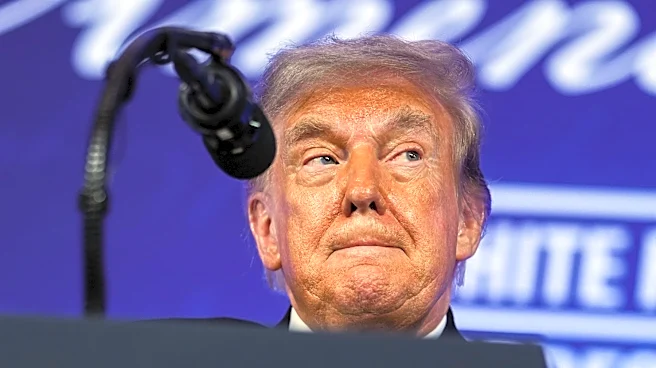
President Donald Trump recently criticized trans advocate and actress Dylan Mulvaney during the White House Correspondents' Dinner, referencing a viral video she made for Bud Light in 2023. The video, which featured Mulvaney's face on a Bud Light can,
was part of a marketing effort to connect with younger consumers but led to a boycott by conservative figures. Trump claimed the video cost Anheuser-Busch InBev $35 billion in market capital. Mulvaney responded to Trump's comments in a TikTok video, expressing surprise that she remains a topic of discussion and emphasizing her freedom and resilience. She encouraged support for trans and nonbinary individuals and urged viewers to view criticism as a compliment.
Why It's Important?
The exchange between President Trump and Dylan Mulvaney highlights ongoing cultural and political tensions surrounding LGBTQIA+ representation in media and marketing. Trump's comments reflect a broader conservative backlash against brands that engage with LGBTQIA+ content creators, which can have significant financial implications for companies. Mulvaney's response underscores the resilience and visibility of trans individuals in the face of public criticism. The situation also illustrates the power of social media as a platform for marginalized voices to counteract negative narratives and mobilize support.
Beyond the Headlines
This incident sheds light on the broader cultural divide in the U.S. regarding LGBTQIA+ rights and representation. It raises questions about the role of corporations in social issues and the potential risks and rewards of inclusive marketing strategies. The backlash against Bud Light's campaign reflects a segment of the population resistant to changing social norms, while Mulvaney's response highlights the importance of representation and advocacy in challenging these attitudes. The situation may influence how brands approach diversity and inclusion in their marketing efforts moving forward.