










What's Happening?
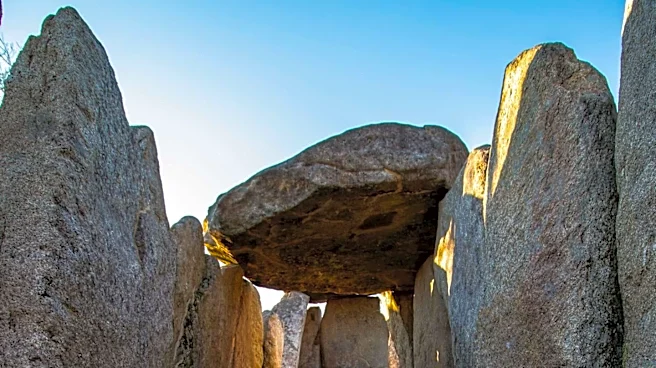
A genetic study of 132 individuals buried in a megalithic tomb near Paris has revealed a significant population collapse and replacement during the Stone Age. Published in Nature Ecology & Evolution, the research indicates that the site was used during two
distinct periods, separated by a major population decline around 3000 BC. DNA analysis shows that the earlier group was related to Stone Age farming populations from northern France and Germany, while the later group had genetic ties to southern France and the Iberian Peninsula. The study also found traces of pathogens like Yersinia pestis, suggesting disease played a role in the population decline.
Why It's Important?
This study provides crucial insights into the demographic and social changes that occurred in Europe during the Stone Age. The findings suggest that the decline of the megalith builders was not solely due to disease but likely involved a combination of factors, including environmental stress and social upheaval. Understanding these changes can help historians and archaeologists piece together the complex history of human migration and societal development in prehistoric Europe. Additionally, the research highlights the role of genetic studies in uncovering historical population dynamics.
Beyond the Headlines
The genetic evidence also points to significant social changes accompanying the population replacement. The earlier period featured burials of extended families, indicating close-knit communities, while the later period showed a shift to a single male lineage, suggesting a different social structure. This transformation may have contributed to the end of megalithic construction, as the new population did not continue the tradition. The study adds to the understanding of how societal changes can impact cultural practices and technological advancements.