


What's Happening?
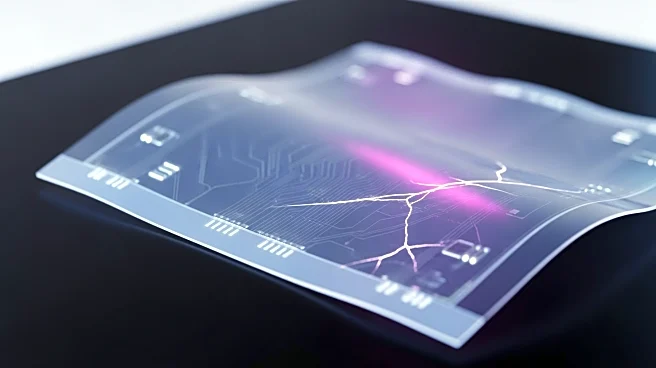
Researchers at Northeast Normal University in China have developed a self-healing pain sensor made from gelatin, which mimics biological pain perception. This innovative device, detailed in a study published in Advanced Functional Materials, uses a memristor
with 16 stable conductance states to replicate the nuanced response of biological nociceptors. These sensors can rate pain intensity, become hypersensitive after injury, and self-heal, offering a significant advancement over traditional binary electronic pain sensors. The system integrates a pressure sensor, a memristor functioning as the nociceptor, and the sciatic nerve of an anesthetized mouse, forming a complete artificial reflex arc. This development could enhance the safety and functionality of robots and inform the design of advanced neuroprosthetics.
Why It's Important?
The creation of a self-healing pain sensor represents a major leap forward in robotics and neuroprosthetics. By enabling robots to perceive and respond to pain-like stimuli, this technology could significantly improve their ability to operate safely in complex environments. The sensor's ability to rate pain intensity and heal itself after damage could lead to more adaptive and resilient robotic systems. Additionally, the potential applications in neuroprosthetics could revolutionize chronic pain management and the development of prosthetic limbs that more closely mimic natural human responses. This could improve the quality of life for individuals with prosthetic limbs or chronic pain conditions.
What's Next?
Future research will likely focus on refining the sensor's capabilities and addressing its current limitations, such as the high healing temperature that exceeds biological tolerance. Researchers may explore ways to lower this temperature to make the technology more applicable to human use. Additionally, further testing and development could lead to the integration of these sensors into commercial robotic systems and neuroprosthetic devices. The potential for widespread adoption in various industries, including healthcare and manufacturing, could drive further innovation and investment in this field.
Beyond the Headlines
The development of this self-healing pain sensor also raises important ethical and legal considerations. As robots and prosthetics become more human-like in their sensory capabilities, questions about their rights and the responsibilities of their creators may arise. Additionally, the integration of such advanced technology into human bodies could lead to debates about the nature of human enhancement and the potential for inequality in access to these technologies. Long-term, this innovation could contribute to a shift in how society views and interacts with both robots and prosthetic devices.