




What's Happening?
The U.S. Army Corps of Engineers has initiated a new process to solicit bids for a long-term solution to glacial flooding in Juneau, Alaska, specifically targeting Suicide Basin. This approach aims to be faster and cheaper than previous proposals, though
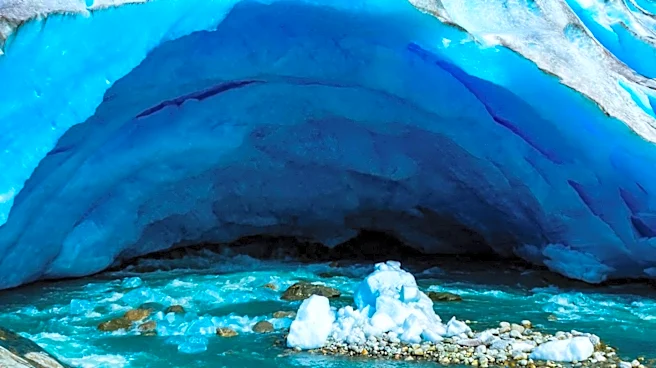
the exact nature of the project remains undefined. Brig. Gen. Clete Goetz of the Army Corps stated that the process will involve 'pitch briefings,' likened to the reality TV show 'Shark Tank,' to select a project and industry partner by the end of the year. A Request for Qualifications (RFQ) has been published, asking bidders to submit plans to prevent Suicide Basin from rising above 1,100 feet and to limit flood discharges to 1,000 cubic feet per second. This initiative invokes President Trump’s 'Building Infrastructure, Not Paperwork' directive, which seeks to shorten permitting timelines and reduce administrative hurdles for Army Corps projects. U.S. Sen. Dan Sullivan, R-Alaska, emphasized the need for innovative and creative approaches to expedite the solution. The urgency stems from annual major floods that have impacted the region, with current temporary measures including five miles of HESCO barriers and an earthen berm along the Mendenhall River.
Why It's Important?
This development is significant for Juneau, Alaska, as it addresses a persistent and escalating threat of glacial outburst floods from Suicide Basin, which has caused annual disruptions and safety concerns for residents. The Army Corps' new, expedited approach signals a shift from traditional, decade-long project timelines and potentially billions of dollars in costs, offering hope for a quicker and more economical resolution. By inviting diverse industry proposals, the initiative could foster innovative engineering solutions that might not have been considered under conventional planning. The invocation of President Trump’s 'Building Infrastructure, Not Paperwork' initiative highlights a broader federal effort to streamline infrastructure projects, which could set a precedent for other complex environmental challenges across the U.S. However, critics have raised concerns that this expedited process might bypass necessary environmental reviews, potentially leading to unforeseen ecological impacts. The success of this model could influence future federal responses to natural disasters and infrastructure needs, balancing speed and cost-efficiency with environmental responsibility.
What's Next?
An 'industry day' for interested bidders is scheduled for next Friday, with a deadline for proposal submissions set for September 4. Pitch presentations are tentatively planned for September 28-30, aiming for a preferred bidder selection by October 7 and a final project award agreement by December 11. This aggressive timeline indicates a strong push to quickly identify and implement a solution. Local mining companies are being considered as prospective partners due to their expertise in drilling and tunneling. U.S. Sen. Lisa Murkowski, R-Alaska, is advocating for a tunnel through Bullard Mountain to drain Suicide Basin, though officials are open to all ideas. The Water Resources Development Act, which aims to fast-track Army Corps paperwork, is another avenue being pursued, but it requires passage by the U.S. Senate and House, along with congressional funding. The Army Corps will continue to utilize existing investigations and data from previous proposals, including a 'lake tap' solution, to inform the expedited process.
Beyond the Headlines
The Army Corps' 'Shark Tank'-style approach to solving the glacial flooding problem in Juneau represents a novel paradigm in federal infrastructure project procurement. This method, prioritizing speed and innovation through competitive industry pitches, could challenge traditional bureaucratic processes and potentially redefine how large-scale environmental engineering projects are conceived and executed. The emphasis on 'Building Infrastructure, Not Paperwork' reflects a broader political push to reduce regulatory burdens, which could have long-term implications for environmental protection standards and public oversight of federal projects. If successful, this model might be replicated for other urgent infrastructure needs, potentially accelerating development but also raising questions about the thoroughness of due diligence and environmental impact assessments. The situation also underscores the increasing urgency of adapting to climate change impacts, as glacial melt contributes to such hazards, pushing agencies to seek unconventional and rapid solutions to protect communities.