
What's Happening?
A significant solar event is set to create a rare opportunity for residents across 20 U.S. states to witness the northern lights. The National Oceanic and Atmospheric Administration's Space Weather Prediction
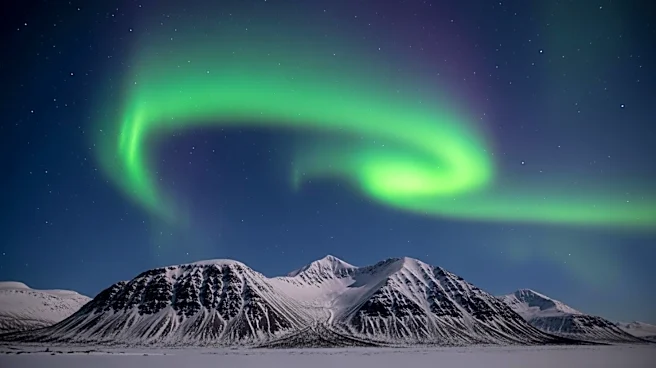
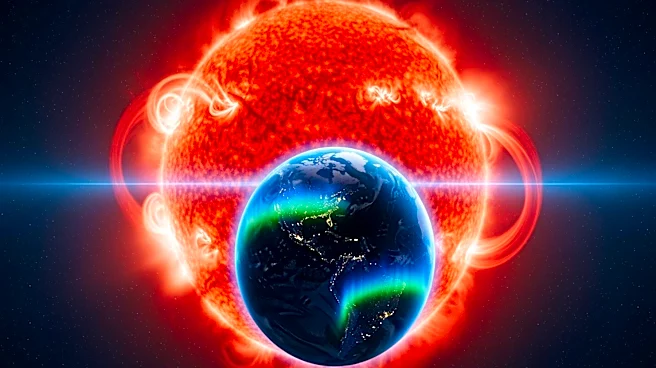
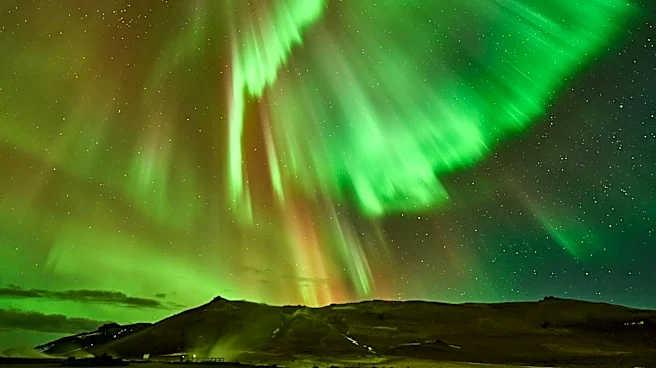
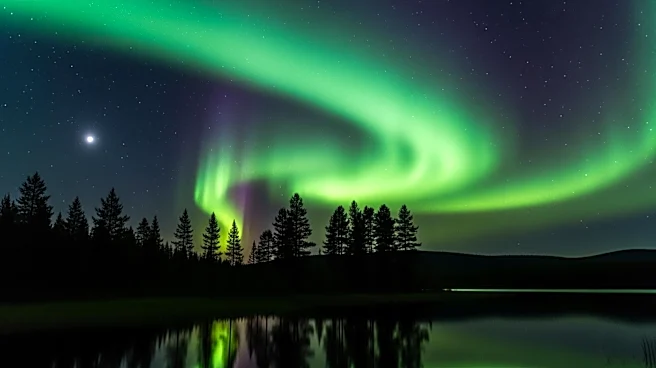
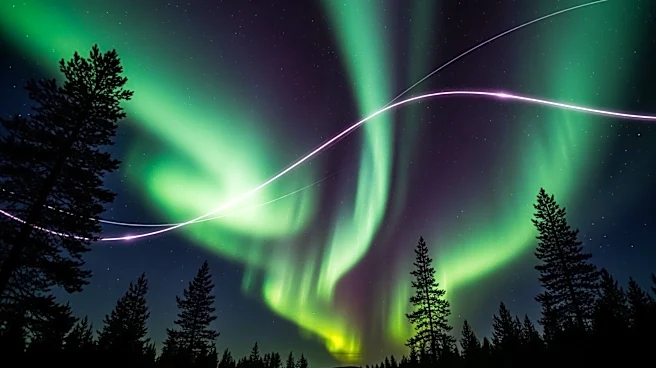
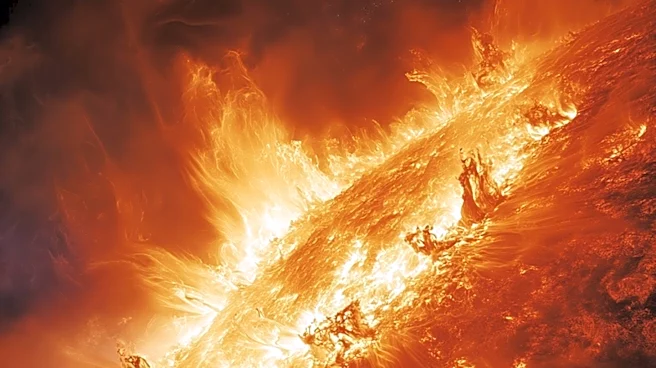
Center has forecasted a geomagnetic storm with a Kp index of 7, indicating a strong likelihood of auroras visible in mid-latitude regions. This phenomenon is the result of a coronal mass ejection from the Sun, which is expected to interact with Earth's magnetic field. The best viewing times are anticipated to be Monday night into early Tuesday, with optimal conditions in areas far from city lights. States such as Washington, Idaho, Montana, and others in the northern tier are expected to have the highest chances of visibility.
Why It's Important?
The occurrence of the northern lights in the continental U.S. is a rare event, typically confined to higher latitudes. This event provides a unique opportunity for millions of Americans to experience a natural phenomenon that is usually out of reach. The geomagnetic storm could also have implications for technology, potentially causing minor disruptions in radio communications and affecting GPS systems. For communities in the affected areas, this event could boost local tourism as enthusiasts travel to optimal viewing locations, providing an economic benefit to those regions.
What's Next?
As the geomagnetic storm progresses, real-time monitoring by NOAA and other agencies will provide updates on the storm's intensity and the likelihood of aurora visibility. Residents in the affected areas are advised to stay informed through these updates to maximize their chances of witnessing the event. Additionally, the potential for radio blackouts and other technological impacts will be closely watched by industries reliant on these systems.