






What's Happening?
The Plastic Pollution Coalition, established in 2009, serves as an alliance of organizations, businesses, and individuals dedicated to eradicating plastic pollution and its detrimental effects. This coalition is one of many entities actively engaged in addressing
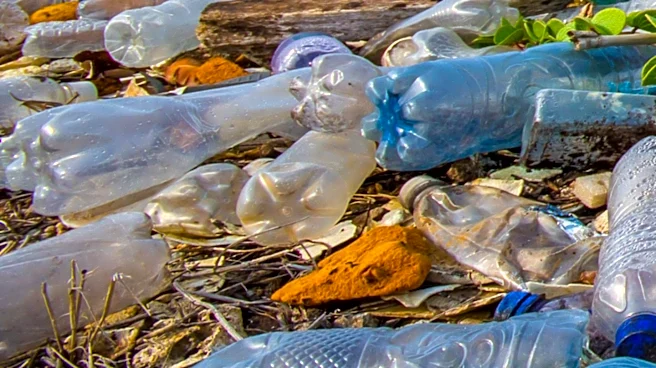
the global plastic crisis. Other notable organizations include the Plastic Soup Foundation, an Amsterdam-based advocacy group focusing on microplastics, human health, and education, and Precious Plastic, which provides open-source plans for recycling equipment to enable local plastic recycling. Algalita Marine Research and Education, founded by Captain Charles Moore, who brought the Great Pacific Garbage Patch to public attention, now concentrates on youth education. Clean Up Australia organizes annual community clean-up events, while EarthX hosts one of the world's largest Earth Day gatherings. The Ocean Recovery Alliance develops tools for cities and businesses to measure and reduce plastic leakage, and One Earth One Ocean builds waste-collecting boats and operates local collection teams. These diverse efforts highlight a broad, multi-faceted approach to tackling plastic pollution through education, advocacy, research, and practical solutions.
Why It's Important?
The collective efforts of organizations like the Plastic Pollution Coalition are crucial for addressing the pervasive issue of plastic pollution, which has significant environmental, health, and economic implications for the U.S. and globally. Plastic waste contaminates oceans, waterways, and land, harming wildlife and ecosystems. Microplastics, a focus of groups like the Plastic Soup Foundation, are increasingly found in food, water, and air, raising concerns about human health impacts. The initiatives by Precious Plastic and One Earth One Ocean to promote local recycling and waste collection can reduce landfill burden and create circular economies, potentially fostering new green jobs and industries. Educational programs from Algalita Marine Research and Education and EarthX are vital for raising public awareness and encouraging behavioral changes, which are essential for long-term solutions. The work of these organizations can influence policy-making, drive corporate responsibility, and inspire technological innovations in waste management and material science, ultimately contributing to a healthier environment and more sustainable economic practices.
What's Next?
The ongoing efforts of these organizations suggest a continued push for comprehensive solutions to plastic pollution. We can anticipate further advancements in recycling technologies, potentially driven by open-source initiatives like Precious Plastic, making local recycling more accessible and efficient. Advocacy groups such as the Plastic Pollution Coalition and the Plastic Soup Foundation will likely continue to lobby for stricter regulations on plastic production and waste management, potentially leading to new legislation or corporate commitments in the U.S. and internationally. Educational campaigns, exemplified by Algalita Marine Research and Education and EarthX, are expected to expand, aiming to foster greater public engagement and promote sustainable consumption habits. Furthermore, organizations like the Ocean Recovery Alliance and One Earth One Ocean will likely continue to develop and deploy innovative methods for plastic collection and prevention, potentially scaling up their operations and influencing global best practices. The collaboration among these diverse groups will be key to developing integrated strategies that address plastic pollution from multiple angles, from source reduction to cleanup and recycling.
Beyond the Headlines
Beyond the immediate environmental and health concerns, the widespread efforts against plastic pollution reflect a deeper societal shift towards sustainability and corporate accountability. The emphasis on open-source solutions, as seen with Precious Plastic, democratizes access to recycling technology, empowering communities to take direct action. This movement also highlights the ethical responsibility of manufacturers and consumers in the lifecycle of products, pushing for a transition from a linear 'take-make-dispose' model to a circular economy. The focus on microplastics by groups like the Plastic Soup Foundation underscores the invisible threats of pollution and the need for more sophisticated scientific research to understand their long-term impacts on human health and ecosystems. The collaborative nature of these organizations, forming alliances and sharing knowledge, demonstrates a growing global consciousness and collective will to address complex environmental challenges, potentially leading to new paradigms in international cooperation and environmental governance.