









What's Happening?
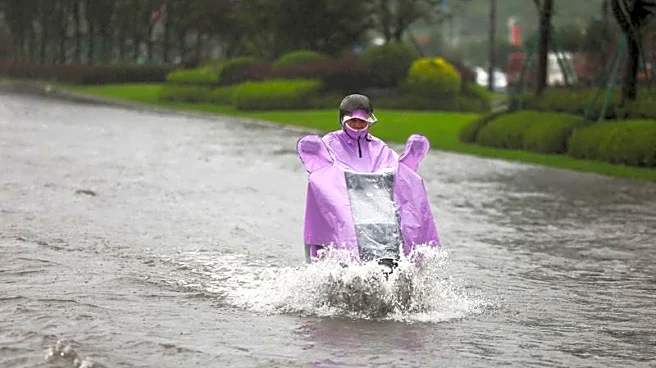
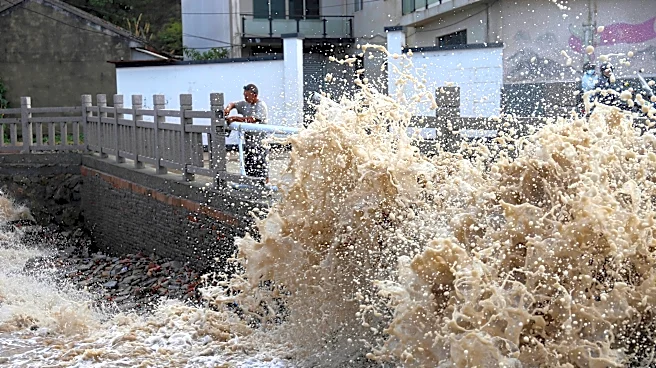
Typhoon Bavi has weakened to a tropical storm after making landfall in eastern China's Zhejiang province. The storm brought powerful winds and heavy rain, leading to the evacuation of over 2.2 million people in Zhejiang and more than 290,000 in Shanghai.
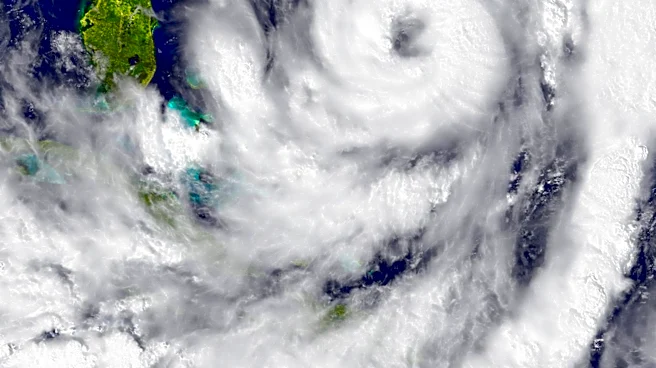
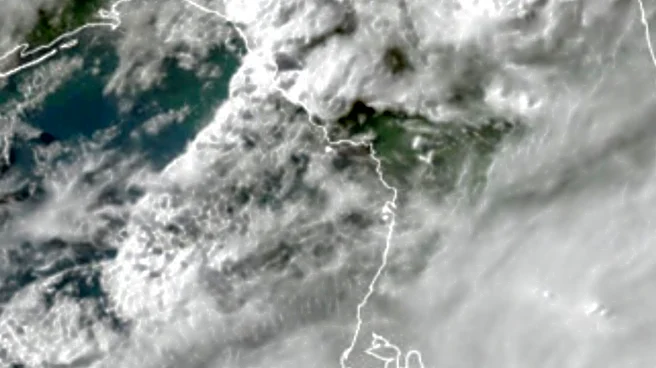
The storm, initially a super typhoon, caused significant disruptions, including the toppling of over 1,300 trees in Yueqing and the cancellation of hundreds of flights and trains in Shanghai and Hangzhou. Bavi made its initial landfall as a super typhoon in the Northern Mariana Islands before affecting China. The storm, roughly the size of France, has been reported to have winds of 101 kilometers per hour and is expected to continue bringing heavy rains to eastern and northern China.
Why It's Important?
The impact of Typhoon Bavi highlights the vulnerability of China's densely populated eastern regions to severe weather events. The evacuation of millions underscores the potential human and economic costs associated with such natural disasters. The disruption to transportation networks, including the cancellation of flights and trains, affects both local and international travel, potentially impacting business operations and supply chains. The storm's effects also raise concerns about infrastructure resilience and the need for effective emergency response systems in the face of increasingly frequent and severe weather events.
What's Next?
As Bavi moves northeast towards the Yellow Sea, continued heavy rains and strong winds are expected to affect additional regions. Authorities will likely focus on recovery efforts, including clearing debris and restoring transportation services. The situation may prompt further evaluations of emergency preparedness and infrastructure resilience in affected areas. Additionally, the storm's progression could lead to further evacuations and disruptions in its path, necessitating ongoing monitoring and response from local and national agencies.