





What's Happening?
A federal appeals court has temporarily halted a lower court's order that required the National Park Service (NPS) to restore exhibits removed under the Trump administration's executive order. The U.S. Court of Appeals for the First Circuit issued a stay
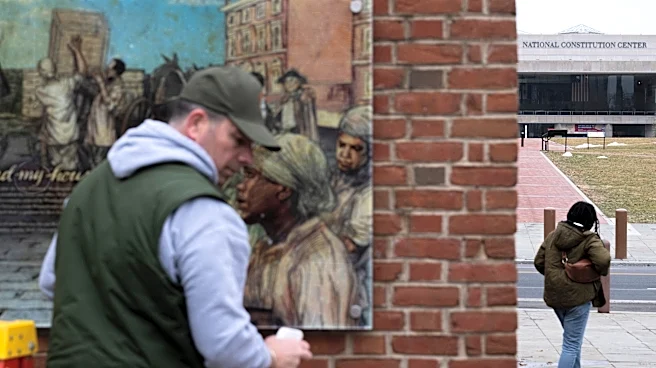
on July 2, allowing the Department of the Interior to continue enforcing Secretary's Order 3431. This order had led to the removal of exhibits related to slavery, civil rights, and climate change from national parks. The decision comes after a coalition, represented by Democracy Forward, sought a preliminary injunction to stop what they termed as 'censorship' in national parks. The coalition argues that the removal of these exhibits constitutes a dangerous precedent of censorship and sanitization. Despite the court's decision, the coalition views it as a temporary setback and remains committed to defending the integrity of national parks.
Why It's Important?
The court's decision has significant implications for how American history and science are presented in national parks. The Trump administration's actions have sparked a debate over the role of national parks as places of learning and reflection versus political messaging. The removal of exhibits could alter public understanding of critical historical and scientific issues, potentially impacting educational efforts and public discourse. The decision also highlights ongoing tensions between government actions and public interest groups advocating for historical accuracy and transparency. The outcome of this legal battle could set a precedent for how future administrations handle similar issues, affecting the preservation and presentation of historical narratives in public spaces.
What's Next?
The legal proceedings are expected to continue as the administration pursues an appeal. The coalition opposing the exhibit removals is likely to continue its efforts to challenge the administration's actions in court. Meanwhile, the NPS may proceed with reviewing and potentially removing additional exhibits that do not align with the administration's criteria. The broader public and stakeholders, including historians and educators, may engage in discussions and advocacy efforts to influence the outcome of this dispute. The case could eventually reach higher courts, potentially leading to a landmark decision on the balance between government authority and historical preservation.