
What's Happening?
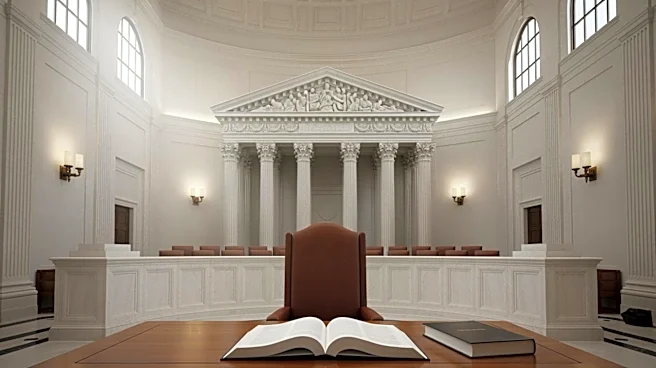
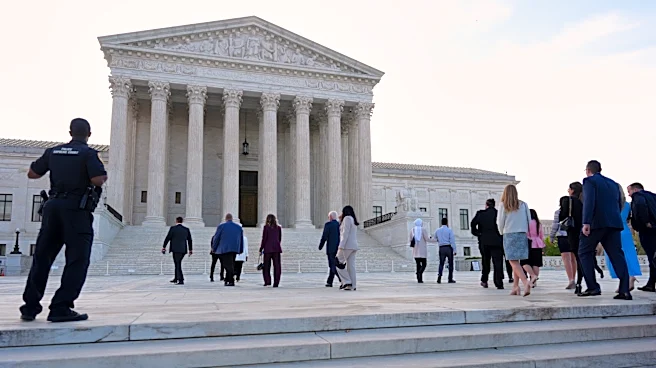
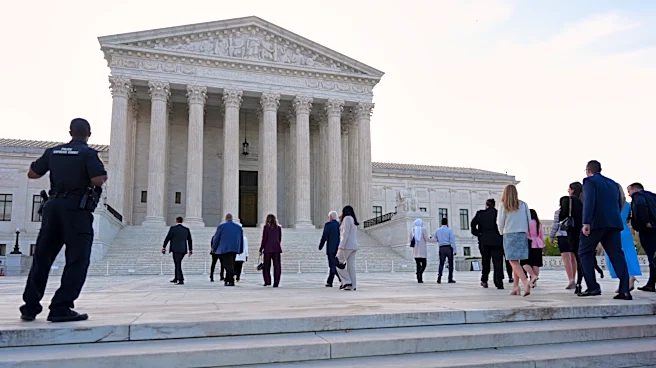
During oral arguments at the Supreme Court, justices expressed skepticism about the historical sources cited by the Trump administration to support its challenge to birthright citizenship. Solicitor General John Sauer argued that the 14th Amendment's
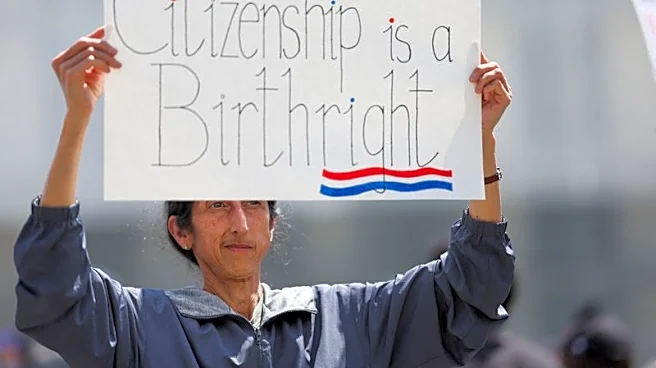
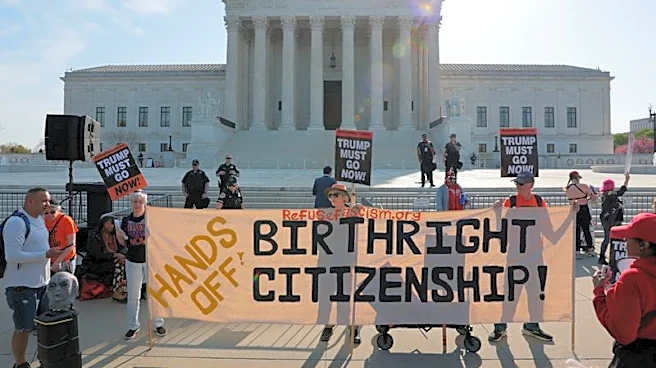
framers intended citizenship to apply only to children of legal immigrants. However, justices questioned the validity of the obscure sources used to support this claim. Chief Justice John Roberts and others highlighted the potential impact of the executive order on millions of people. The case, Trump v. Barbara, could redefine the interpretation of the 14th Amendment and has drawn significant public and legal attention.
Why It's Important?
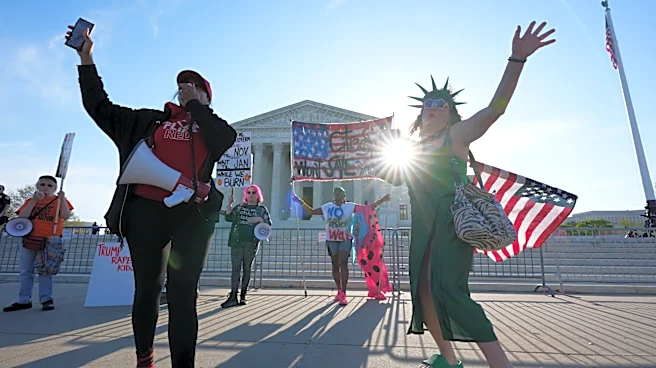
The case represents a pivotal moment in U.S. constitutional law, as it challenges a fundamental aspect of citizenship rights. A decision to overturn birthright citizenship could have far-reaching consequences for immigration policy and the legal status of millions of individuals born in the U.S. The justices' skepticism suggests a potential reluctance to support the administration's position, which could reaffirm the current understanding of the 14th Amendment. The case also highlights the ongoing debate over immigration and citizenship, reflecting broader societal and political divisions.
What's Next?
A ruling from the Supreme Court is anticipated by July. The decision could either uphold the executive order or reaffirm birthright citizenship as settled law. The outcome will likely influence future legal interpretations and policy decisions regarding citizenship and immigration. Depending on the ruling, there may be legislative efforts to address the issue, as well as continued advocacy from civil rights organizations. The case's resolution will be closely watched by legal experts, policymakers, and immigrant communities.