



What's Happening?
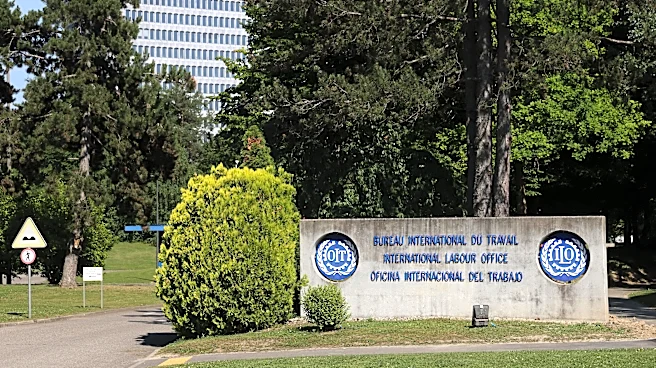
The International Labour Organization (ILO) has published a brief detailing the main features of national social dialogue institutions (NSDIs) across 12 countries in the Arab States region. Utilizing the ILO NSDI Database, the brief reveals that while
eight countries possess an identifiable peak-level institution, only six were actively functioning between 2025 and 2026. Notably, several Gulf countries lack a permanent NSDI. These institutions vary in form, ranging from economic and social councils to tripartite committees, and in Bahrain, a tripartite regulatory authority. The brief highlights that most of these bodies are chaired by ministers, with significant government representation. It also identifies a recent surge in new or revitalized institutions in Iraq, the Syrian Arab Republic, and Lebanon. The ratification rates for ILO Conventions Nos. 144, 87, and 98 remain low and have largely stagnated.
Why It's Important?
This ILO brief is important as it sheds light on the state of social dialogue and labor rights in a geopolitically significant region. The limited activity of NSDIs and low ratification rates of key ILO conventions in Arab States indicate potential challenges in promoting decent work, protecting labor rights, and fostering stable industrial relations. For the U.S., this has implications for its foreign policy, trade relations, and efforts to promote human rights globally. Weak social dialogue can lead to labor unrest, hinder economic development, and create instability, which could indirectly affect U.S. interests in the region. Furthermore, the findings can inform U.S. businesses operating in or considering investment in these countries about the labor landscape and potential risks related to worker representation and rights.
What's Next?
Published in the 50th anniversary year of Convention No. 144, the brief outlines priorities for consolidating existing institutions, addressing gaps in the Gulf region, strengthening the autonomy of these bodies, and promoting the ratification of relevant ILO conventions. The ILO will likely use these findings to engage with governments in the Arab States to encourage reforms and greater adherence to international labor standards. This could involve technical assistance, capacity-building programs, and advocacy efforts. The renewed focus on institutions in Iraq, Syria, and Lebanon suggests potential for future development in these areas, which could be supported by international partners, including the U.S., through diplomatic channels and development aid.
Beyond the Headlines
The brief implicitly highlights the broader challenges of governance and civil society engagement in the Arab States. The strong governmental presence in NSDIs and the lack of permanent institutions in some Gulf countries suggest a potential imbalance in power dynamics, where the voice of workers and employers might be less influential. This raises questions about the genuine effectiveness of social dialogue in these contexts and the extent to which it genuinely contributes to social justice and equitable labor practices. The low ratification of core ILO conventions also points to a deeper issue regarding the commitment to international labor norms, which can have long-term consequences for economic development, human rights, and regional stability. The study encourages a critical examination of how social dialogue can be genuinely fostered in diverse political and cultural landscapes.