



What's Happening?
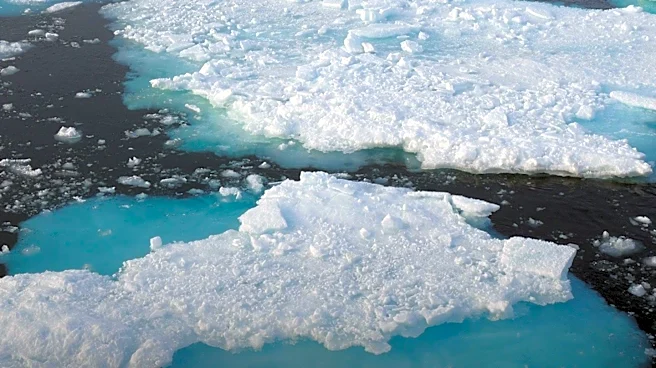
Rising global temperatures are causing permafrost in Arctic and high-mountain regions to thaw, leading to the release of significant amounts of organic carbon stored within the frozen ground. This organic carbon, when exposed to microorganisms after thawing,
breaks down and releases greenhouse gases, primarily carbon dioxide and methane, into the atmosphere. This process creates a feedback loop where increased greenhouse gas emissions contribute to further warming, which in turn accelerates permafrost thaw. The hazards of melting permafrost extend beyond atmospheric changes, causing ground collapse, landslides, and coastal erosion, which destabilize infrastructure and disrupt ecosystems. Examples include the expanding Batagaika Crater in Siberia and major landslides in northeastern Siberia, demonstrating how permafrost degradation reshapes landscapes and exposes ancient carbon.
Why It's Important?
The release of greenhouse gases from thawing permafrost is a critical factor in accelerating global climate change. Methane, in particular, has a greater warming effect than carbon dioxide over shorter periods, and its release from newly formed wetlands and thermokarst lakes in oxygen-poor conditions can significantly amplify warming. This permafrost carbon feedback loop means that even if human-caused emissions are reduced, the natural release of these gases could continue to drive temperature increases. The physical impacts, such as ground instability and coastal erosion, pose direct threats to infrastructure, communities, and ecosystems in affected regions, necessitating substantial investments in adaptation and resilience measures. The scale of these natural emissions could overwhelm the capacity of natural carbon sinks, making the challenge of achieving net-negative emissions even more complex.
What's Next?
Addressing the risks associated with thawing permafrost will require a dual approach: reducing global greenhouse gas emissions to slow the rate of warming and implementing local adaptation strategies to manage the immediate physical impacts. Continued monitoring of permafrost changes is crucial to improve climate projections and refine estimates of future carbon emissions. Research into artificial methods of extracting and storing atmospheric CO2, as well as other geoengineering solutions, may become increasingly important to achieve negative emissions and mitigate the consequences of climate change. However, these artificial methods come with significant risks and ethical implications that require further investigation. Communities in permafrost regions will need to develop and implement strategies to cope with unstable ground, changing coastlines, and disrupted infrastructure.
Beyond the Headlines
The thawing of permafrost highlights the interconnectedness of Earth's climate systems and the potential for natural processes to amplify human-induced climate change. The ethical implications of geoengineering solutions, such as those designed to reduce solar energy reaching Earth, are profound, as they could have unintended consequences like ocean acidification. The long-term shifts triggered by permafrost thaw could lead to irreversible changes in Arctic landscapes and ecosystems, impacting indigenous communities and their traditional ways of life. The economic costs associated with infrastructure damage, relocation efforts, and increased maintenance in these regions will be substantial, adding another layer of complexity to climate change mitigation and adaptation efforts. This situation underscores the urgency of a comprehensive global response to climate change that considers both immediate and long-term, direct and indirect impacts.