








What's Happening?
Ana Kasparian, co-host of The Young Turks, has publicly stated that she is no longer an atheist and is moving closer to Christianity. This personal shift is occurring within a broader cultural context where several public figures, previously identified
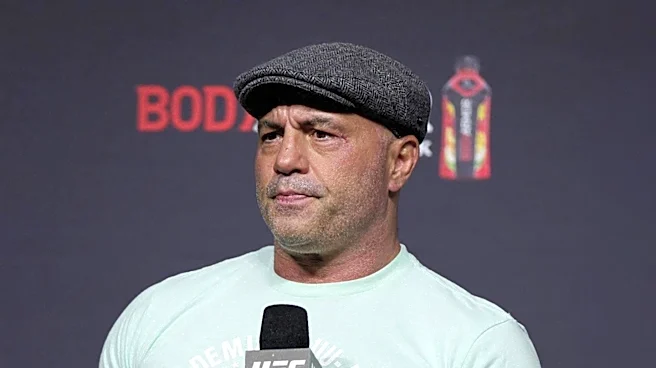
as atheists or agnostics, are re-evaluating their nonbelief or expressing a renewed interest in religion. Notable examples include Ayaan Hirsi Ali converting to Christianity, Joe Rogan attending church, and Elon Musk acknowledging a 'Creator.' This trend is perceived by some as a 'New Theism' or 'faitheism,' characterized by a cultural appreciation for religion's societal utility, even if not always accompanied by genuine theological conviction. While some interpret this as a religious revival, Gallup polls indicate a continued decline in American religious service attendance and the percentage of adults who consider religion important in their lives, suggesting the shift might be more performative or concentrated among specific demographics, such as young men.
Why It's Important?
This evolving stance from a prominent media personality like Ana Kasparian, alongside other public figures, reflects and potentially influences a significant cultural and intellectual discussion in the U.S. The re-evaluation of atheism and the embrace of religious or 'cultural Christian' identities by influential voices could impact public discourse on secularism, morality, and societal values. It highlights a perceived backlash against cultural progressivism and a search for meaning in a post-pandemic world. For media organizations, this shift among commentators like Kasparian could lead to changes in how religious topics are discussed and framed, potentially broadening perspectives or sparking new debates within progressive media circles. The trend also raises questions about the authenticity of such conversions, with critics suggesting it might be a strategic rebrand in response to shifting political and cultural tides, rather than a deep spiritual awakening. This dynamic could further polarize discussions around faith and secularism in American society.
What's Next?
The ongoing public discourse around figures like Ana Kasparian and their evolving religious views is likely to continue shaping conversations about faith, secularism, and cultural identity in the U.S. Media outlets and commentators will likely further analyze whether this trend represents a genuine religious resurgence or a more superficial 'vibe shift' in public sentiment. There may be increased scrutiny on the motivations behind such public declarations and their impact on the broader atheist and religious communities. This could lead to more nuanced discussions about the role of religion in public life, the perceived failures of secularism, and the search for meaning in contemporary society. Additionally, the trend might encourage other public figures to share their own evolving spiritual journeys, further contributing to a complex and multifaceted national conversation on belief and non-belief.
Beyond the Headlines
The phenomenon of prominent individuals re-evaluating their atheism and moving towards religious or 'cultural Christian' identities points to deeper societal anxieties and a search for stability in an increasingly complex world. Beyond individual conversions, it highlights a potential shift in the intellectual landscape, where the perceived certainties of 'New Atheism' are being questioned. This could lead to a re-examination of the role of reason, faith, and tradition in addressing contemporary challenges such as social fragmentation, political polarization, and the crisis of meaning. The emphasis on the 'sociocultural utility' of religion, even without deep conviction, suggests a pragmatic turn, where faith is valued for its perceived ability to foster community and moral order. This raises ethical questions about the instrumentalization of religion and the potential for 'faitheism' to undermine genuine spiritual inquiry, potentially leading to a more superficial engagement with religious traditions. It also underscores the ongoing tension between rationalism and the human need for belonging and purpose.