



What's Happening?
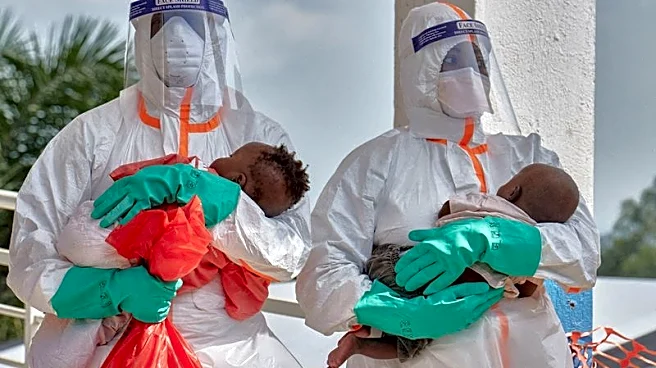
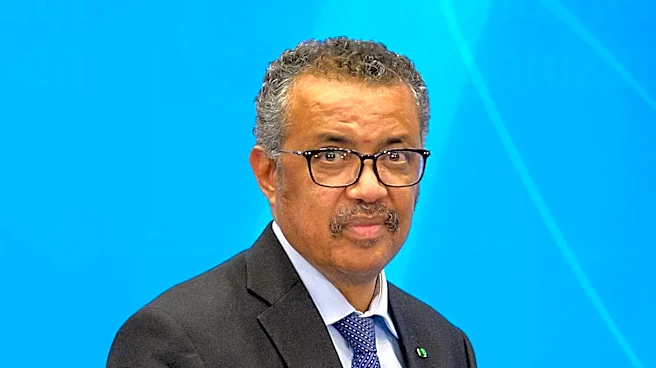
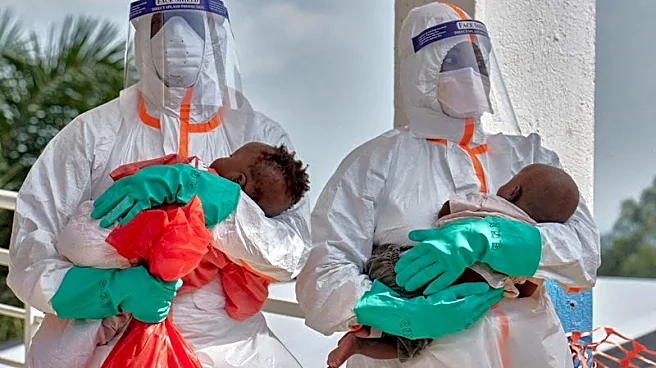
The World Health Organization (WHO) Director-General Tedros Adhanom Ghebreyesus visited Congo to address the rapidly spreading Ebola outbreak, which has resulted in 3,874 confirmed cases and 1,751 deaths. The visit comes as some health workers have gone
on strike due to unpaid wages, exacerbating the healthcare challenges in the region. The outbreak, centered in Ituri, is the second-largest in history, following the 2014-2016 West Africa outbreak. The Bundibugyo virus causing this outbreak has no approved treatment or vaccine, and late detection of cases has contributed to a high fatality rate. The WHO aims to improve response efforts and break transmission chains, but contact tracing remains ineffective, with many new cases arising outside monitored groups.
Why It's Important?
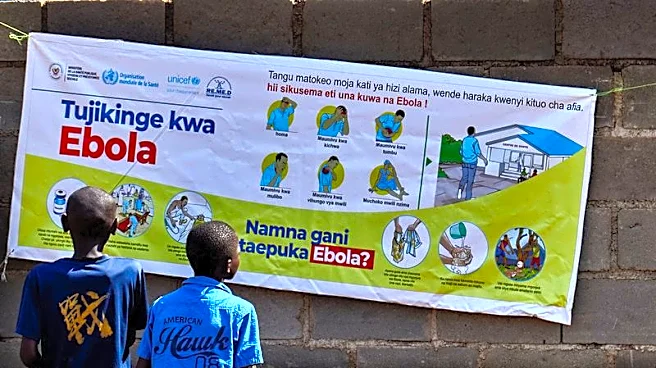
The Ebola outbreak in Congo poses significant health risks and challenges to the region's already fragile healthcare system. The strike by health workers further complicates efforts to contain the virus, potentially leading to more fatalities and a wider spread. The situation highlights the need for improved healthcare infrastructure and support for frontline workers. The outbreak's rapid transmission underscores the importance of timely detection and effective contact tracing to prevent further escalation. The international community's response, including the WHO's involvement, is crucial in managing the crisis and preventing a global health emergency.
What's Next?
Efforts to contain the Ebola outbreak will likely focus on improving healthcare access and resolving the strike by health workers. The WHO and local authorities may need to enhance contact tracing and case detection to reduce the fatality rate. International support and funding could be pivotal in strengthening healthcare infrastructure and providing necessary resources. The situation may prompt discussions on long-term solutions for healthcare challenges in conflict-affected regions like Congo.