

What's Happening?
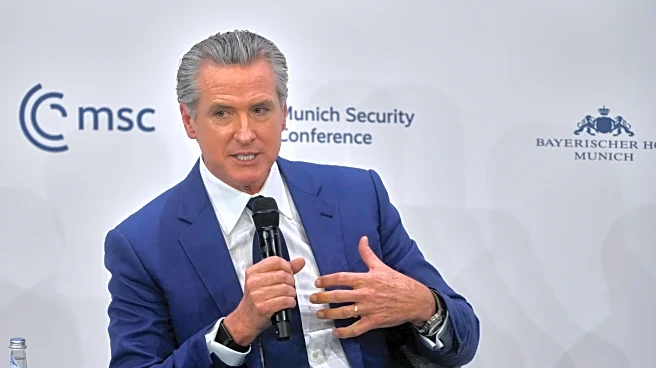
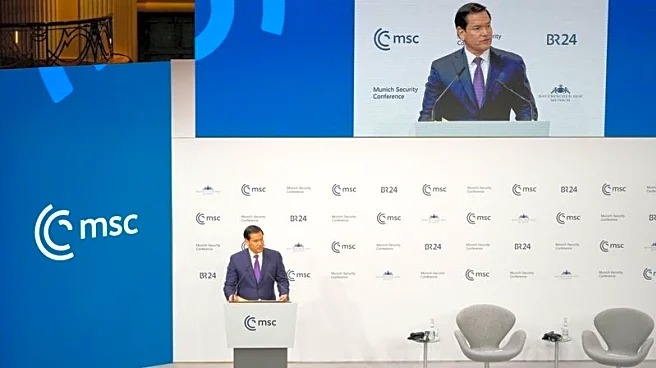
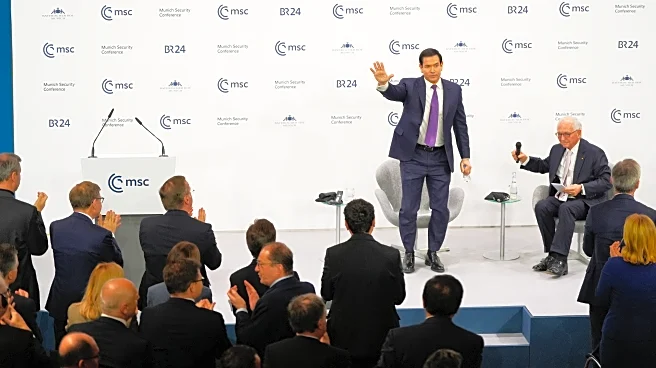
At the Munich Security Conference, Rep. Alexandria Ocasio-Cortez (D-NY) was questioned about the U.S. stance on defending Taiwan in the event of a Chinese invasion. Ocasio-Cortez did not provide a definitive answer, highlighting the longstanding ambiguity
of U.S. policy on this issue. She emphasized the importance of avoiding such confrontations through economic and global positioning. The context of this discussion is the ongoing tension between China and Taiwan, with China conducting military exercises around Taiwan, which it claims as its territory. These exercises have raised concerns about a potential invasion, especially following the Trump administration's approval of an $11 billion arms sale to Taiwan.
Why It's Important?
The ambiguity in U.S. policy regarding Taiwan's defense is significant as it reflects the delicate balance the U.S. maintains in its foreign relations with China and Taiwan. The U.S. has historically avoided a clear stance to prevent escalating tensions with China while supporting Taiwan's self-defense capabilities. Ocasio-Cortez's non-committal response underscores the complexity of the issue, which involves strategic, economic, and military considerations. The situation is critical as it could influence U.S. foreign policy and military strategy in the Asia-Pacific region, potentially affecting international relations and economic stability.
What's Next?
The ongoing military activities by China around Taiwan and the U.S.'s response will likely continue to be a focal point in international relations. The U.S. may need to clarify its position to allies and adversaries alike, especially as China continues to assert its claims over Taiwan. Future diplomatic engagements and military strategies will be closely watched by global stakeholders, including other nations in the Asia-Pacific region. The potential for increased military presence or diplomatic negotiations could shape the geopolitical landscape significantly.